How the C&O Canal Helped Fast-Track the Nation — and Shaped Georgetown
The Chesapeake & Ohio Canal transformed early American transport and industry and left a lasting imprint on Georgetown and the Potomac waterfront.
Sophie McAlister ·
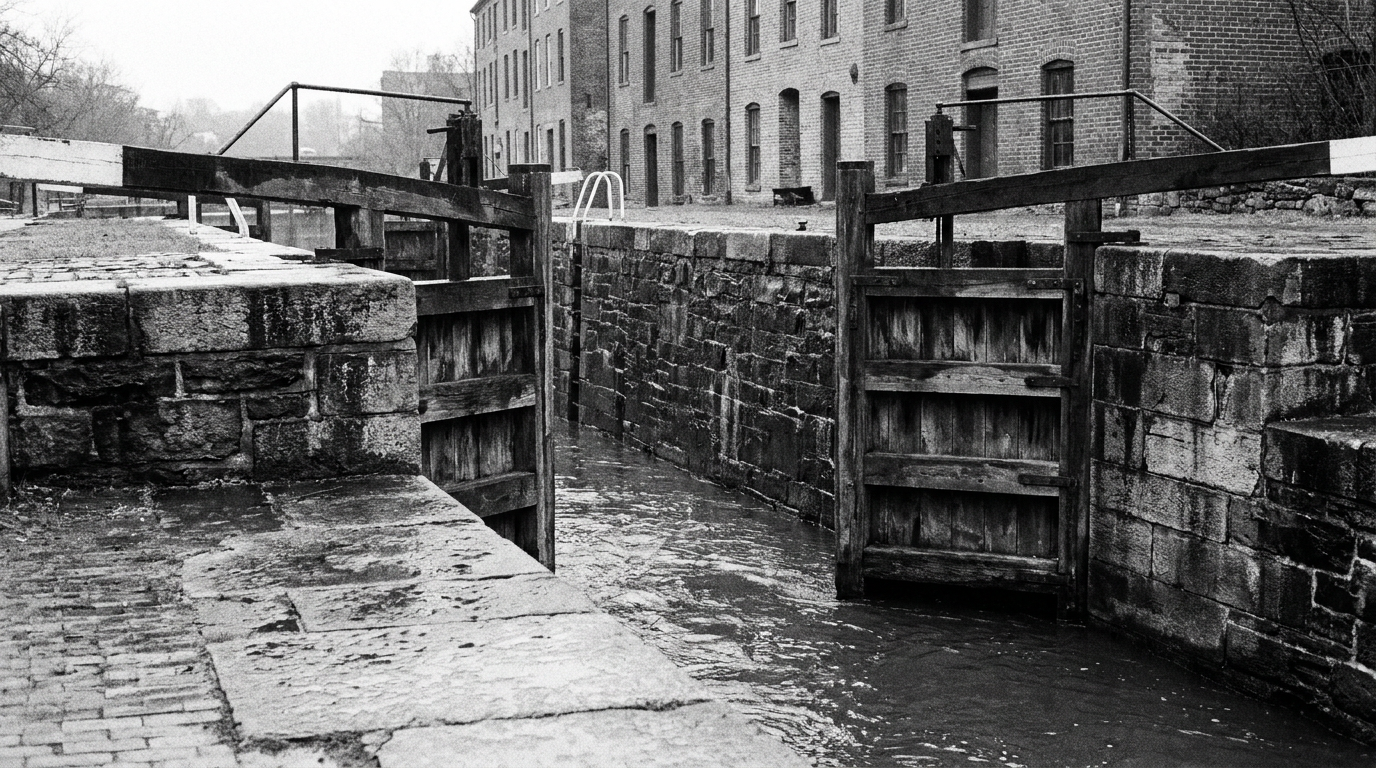
The Chesapeake and Ohio Canal — the C&O Canal — was built in the early nineteenth century to connect the tidewater of the Chesapeake with the interior and speed movement of raw materials. Construction began in the late 1820s and the canal ultimately stretched west from Georgetown along the Potomac River to Cumberland, Maryland. Its locks, towpath and commercial traffic helped lower the cost and time of moving coal, grain and other goods into Washington and beyond.
At its peak, barges towed by mules or horses threaded the narrow channel while warehouses and businesses clustered near canal heads and portals. The canal offered a reliable overland alternative to the poor roads of the era and tied regional producers into growing eastern markets. While railroads later eclipsed canal freight, the C&O Canal accelerated the shift toward industrial-scale commerce in the mid-nineteenth century.
Engineering, commerce and a changing landscape
The canal required an extensive system of locks, aqueducts and cuttings to follow the Potomac’s contours, and the construction effort itself mobilized local labor and capital. The infrastructure pushed new patterns of settlement and commerce: mills, quarries and coal mines that supplied Washington and Mid-Atlantic cities expanded output because the canal made transport feasible and cheaper. That economic wiring helped integrate the region into the broader industrial economy of the young United States.
Georgetown served as the canal’s eastern terminus and a loading point where goods and passengers connected to the city. The presence of canal trade contributed to warehousing, shipyards and related businesses along the waterfront, shaping the neighborhood’s 1800s economy. Over time, the decline of commercial canal use left physical traces — a towpath, abandoned locks and lockhouses — that would later be reimagined as public space.
From commerce to conservation
After commercial traffic faded, the canal corridor gradually shifted from industrial artery to recreational landscape. Preservation efforts and federal stewardship transformed much of the route into protected lands, with the towpath serving as a long greenway for cyclists, walkers and history-minded visitors. Today portions of the canal run through what is managed as a national historical park, drawing both local residents and tourists to Georgetown’s waterfront and upstream sections along the Potomac.
Interpretive signs, restored lockhouses and periodic guided programs help visitors understand how the canal shaped regional growth. The canal’s surviving structures and landscapes are now part of a civic asset that contributes to neighborhood character, recreation and tourism in Washington while preserving an industrial-era story.
Looking forward, managers and community groups are balancing preservation, access and environmental stewardship along the canal corridor. Discussions about maintenance, river health and public programming will shape how the C&O Canal remains both a historic artifact and an active part of Washington’s public realm.