Cloud DCIM market's $8.38 billion growth claims push procurement to AI services
A GlobeNewswire press release claims the data center DCIM services market will expand to $8.
Edward Mullen ·
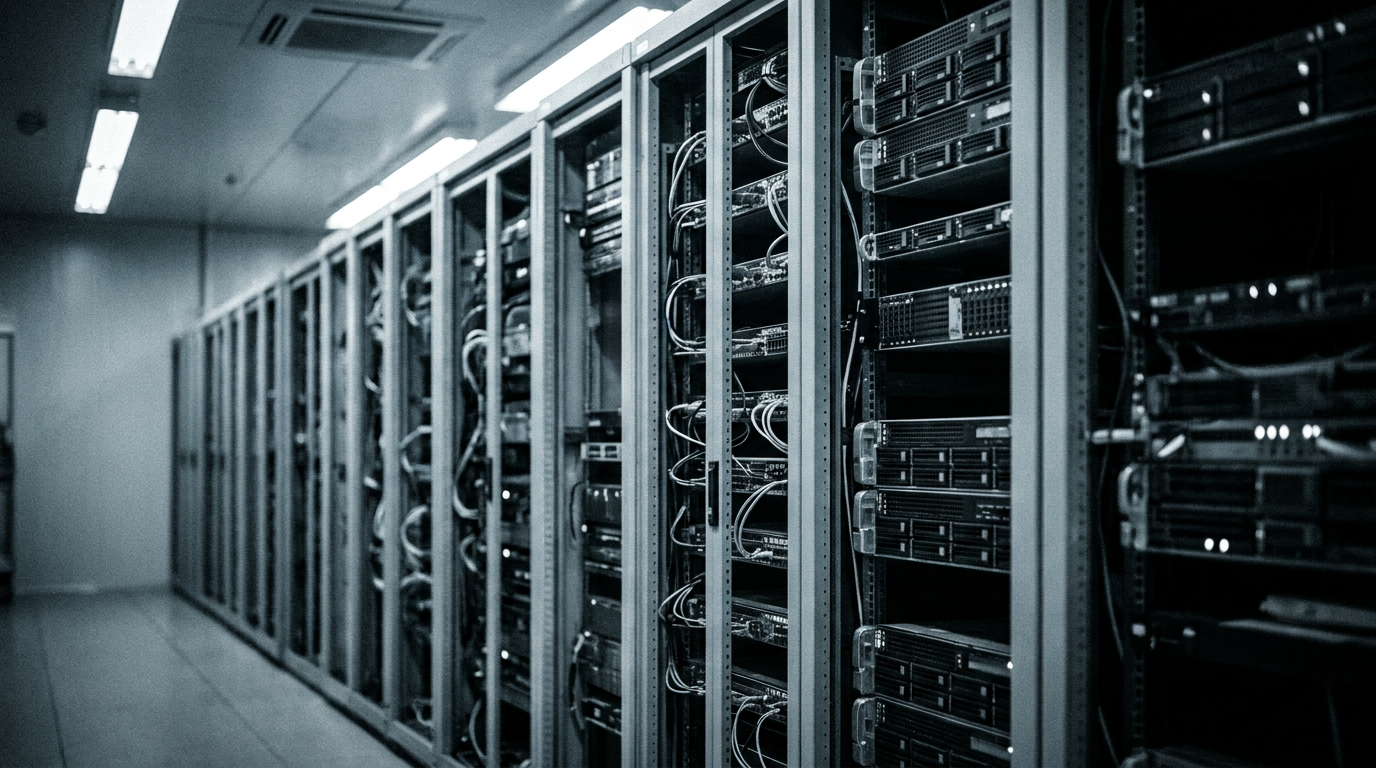
Conventional wisdom dictates that data center efficiency gains primarily stem from better hardware and incremental software improvements. However, a less obvious, yet more profound, transformation is underway in procurement. The era of merely maintaining data centers reactively is yielding to a future where artificial intelligence dictates proactive, automated solutions, profoundly reshaping vendor relationships and internal operational strategies.
What the press release actually claims
The release lists the same set of market drivers twice: demand for “hybrid infrastructure management, real-time analytics, and cloud-based DCIM services,” expansion in colocation and hyperscale data centers, and a focus on energy optimization and sustainability compliance, with North America leading and Asia-Pacific described as rapidly expanding. That is the factual content the market projection rests on; the headline figure is $8.38 Billion.
The document is a marketing blog–tier signal and does not publish methodology, baseline comparators, or the client engagements that would substantiate the revenue projection.
Why procurement, not just efficiency, is the right lens Taken literally, the release’s emphasis on cloud-based DCIM and real-time analytics implies a contractual shift: buyers are less likely to purchase standalone monitoring tools and more likely to buy managed, SaaS-like services that embed analytics and automated workflows. If enterprises and colocation operators accept the pitch, procurement moves from buying meters and dashboards to buying outcome-based service slabs—SLAs for automated remediation, predictive maintenance, and capacity orchestration—bundles that carry higher recurring revenue and different margin profiles for vendors.
This is a margin-structure shift for procurement teams and for vendors negotiating multi-year services contracts.
What the source does not show — the missing mechanisms The press release is silent on the concrete mechanisms of automation: which operational tasks are automated, what degree of human oversight remains, how models are trained on cross-customer telemetry, or who owns the operational liability when an automated action errs. It also omits the labor and reskilling side: there is no discussion of technician workflows, training programs, or transition timelines.
Those omissions matter because they determine whether procurement will actually reallocate spend from hardware refreshes to managed automation services, or merely layer software fees on top of existing staffing models.
The skeptical read: marketing optimism versus procurement reality A plausible counter-read is the one the release itself leans into: buyers are primarily seeking better power and cooling efficiency and regulatory compliance, not sweeping automation. Procurement organizations, especially in regulated or mission-critical facilities, often resist ceding control to opaque automation.
Without documented pilots, baseline-to-outcome comparisons, or vendor risk-sharing clauses, many buyers will treat DCIM SaaS as complementary rather than substitutive, maintaining much of their existing maintenance and staffing spend. The press release offers no evidence to adjudicate between those outcomes.
Who benefits, who faces margin pressure, and the under-noticed middle
If the automation-procurement thesis holds, hyperscalers and large cloud providers are positioned to convert telemetry into integrated services that they resell or embed, while DCIM software vendors that can package automation and outcome guarantees will expand recurring margins. Colocation operators that upgrade their procurement to buy automation-as-a-service could capture higher utilization rates.
The exposed middle includes legacy monitoring vendors and system integrators that bill primarily for manual interventions; their margins compress if buyers favor turnkey, SaaS-delivered automation. The press release names expansion in colocation and hyperscale data centers but does not connect that expansion to specific procurement terms or contracting behavior, leaving the middle invisible in the public claim.
Observable signals that would prove or disprove this claim Watch whether procurement documents and RFP templates issued by large cloud, colocation, and enterprise buyers in the next two quarters shift requirements from ‘‘monitoring’’ to ‘‘automated remediation’’ and whether vendors start offering risk-sharing SLAs tied to automated actions; if early 2026 operational data still shows manual intervention for most critical tasks, the thesis is weakened. Also watch vendor financials: if major DCIM suppliers report growing revenue from AI/automation modules in upcoming earnings, that supports the procurement shift; if instead those lines decline, the press release framing looks like marketable optimism.
Finally, monitor job listings: a rise in postings requiring AI/ML skills for data center operations would corroborate actual adoption, while a drop would falsify it.
The GlobeNewswire release supplies a headline number and a repeated list of opportunity areas, but it leaves the procurement mechanics, operational scope of automation, and workforce impacts unaddressed. For executives preparing vendor RFPs or negotiating multi-year data center services, the immediate task is contractual: demand performance definitions, failure-mode liabilities, and transition timelines before accepting the marketing claim that DCIM spend is now a pathway to automation-driven margins.