Chinese car tariffs win German auto body support on hybrids
Chinese car tariffs gained backing from Germany’s VDA as Chinese hybrid sales in the EU climbed from hundreds in 2022 to six figures this year.
Cuneyd Erdogan ·
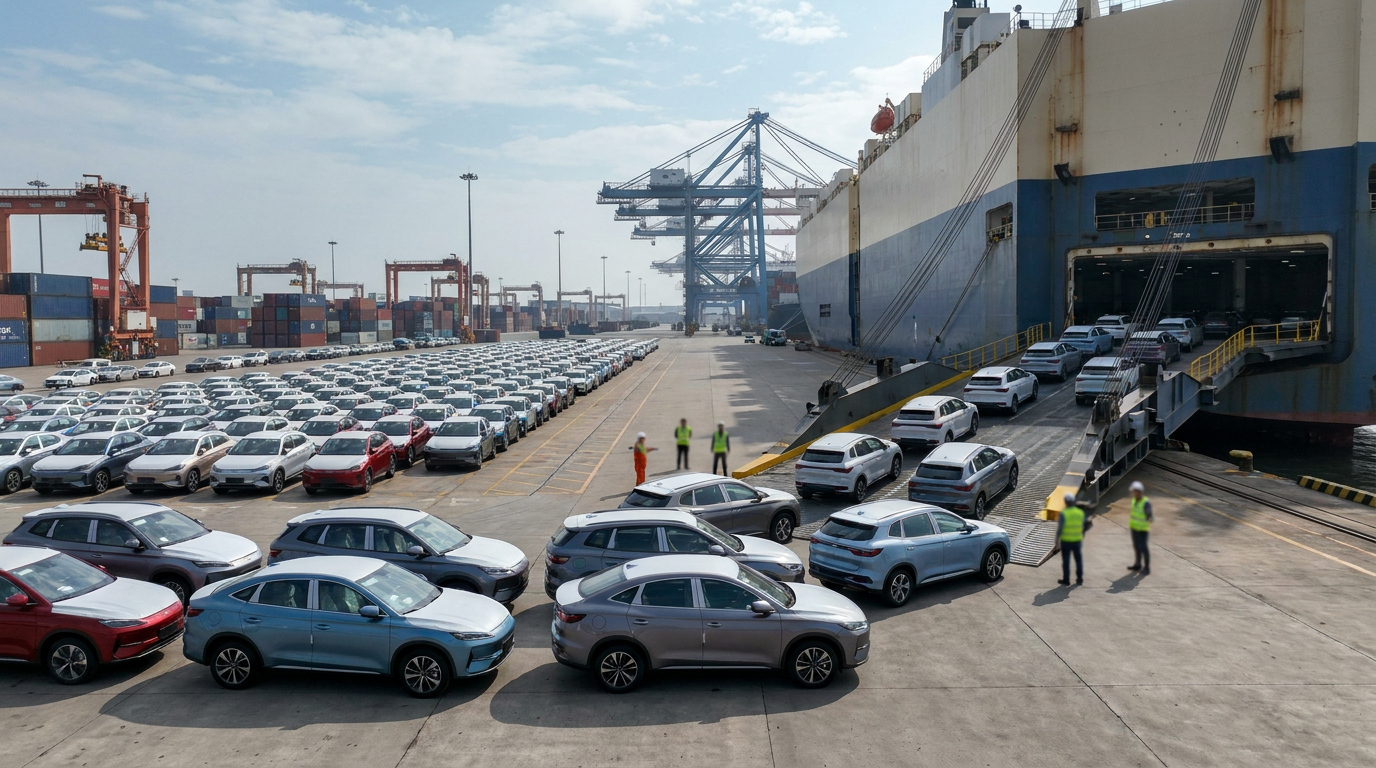
Chinese car tariffs won support from Germany’s auto lobby as Chinese hybrid sales in the EU rose from 659 in 2022 to 160,662 this year.
Hildegard Müller, president of the German auto industry trade body VDA, said trade defense measures may be used once distortions pass a defined threshold. In published remarks, she tied any intervention to "proven unfair behaviour," a narrower test than a general argument for closing markets.
Müller resets the tariff line
The stance marks a break from the VDA’s position two years ago, when it opposed European Union duties on Chinese electric vehicles. Germany also voted against those measures, but a majority in the bloc of 27 countries backed extra duties of up to 35% in October 2024.
Müller also stressed the other side of the calculation: China remains an "important sales and sourcing market" and a "significant innovation hub" for German carmakers. One measure of that exposure is Volkswagen Group’s 20 production lines in China, which leaves German manufacturers arguing for protection while retaining deep industrial ties to the market at issue.
Hybrids widen Europe’s policy gap
An internal VDA document dated September 16 described World Trade Organization-compliant trade defense tools as legitimate and, in cases of proven distortion, "necessary." The document also said that where existing rules "fall short," policymakers should consider "targeted new instruments" and make needed adjustments promptly.
The immediate pressure point is hybrids, which sit outside the cleanest version of the EU’s 2024 electric-vehicle tariff case. Eurostat figures cited in the material show Chinese-made fully hybrid car sales in the EU rising from 659 in 2022 to 160,662 in the first seven months of this year.
Plug-in hybrids moved on a larger base. Sales of Chinese-made plug-in hybrid vehicles rose from 56,706 in 2022 to 217,764 from January to July this year, according to the same Eurostat figures.
The distinction matters for policy design. Fully hybrid cars use a petrol or diesel engine to charge the motor and battery, while plug-in hybrids can also recharge from an external power source and are often marketed for longer driving distances.
Volkswagen exposure limits the shift
For German carmakers, the commercial tension is direct: tougher EU barriers may slow Chinese imports into Europe, but retaliation or weaker China access would land on companies with production, sourcing and sales exposure there. Volkswagen is the clearest example in the material, with 20 production lines in China set against a European market where Chinese hybrid models are gaining volume.
The VDA’s new language does not amount to a call for blanket import restrictions. It instead places the industry behind a conditional test: if competition is proven to be distorted, then trade defense tools can be justified; if that proof is not made, China remains too central to German supply chains and sales to treat as a normal external competitor.
Brussels faces the hybrid test
If the European Commission extends safeguards to hybrid imports, the global trade channel would run through EU-China goods flows rather than through monetary policy or demand alone. Volkswagen and other German producers would face a more protected European market, while the wider auto sector would have to adjust sourcing, pricing and model strategy around another tariff boundary.
If Brussels leaves the current framework largely unchanged, Chinese hybrid exports may continue to test the line between electric-vehicle duties and adjacent powertrains. That path would keep cost pressure on European manufacturers, while giving Chinese brands more room to use hybrid models as an entry point into the EU market.
The main uncertainty is the evidentiary threshold. The VDA has moved from opposing tariffs in principle to accepting them in cases of proven distortion, but the next step depends on whether EU officials decide hybrid volumes show circumvention, unfair competition or a normal shift in consumer demand.