China tech earnings gauge rotation into internet stocks
China tech earnings from Tencent, JD.com and SMIC will test whether investors keep favoring internet platforms over chipmakers as AI infrastructure trades…
Atlas Newsdesk ·
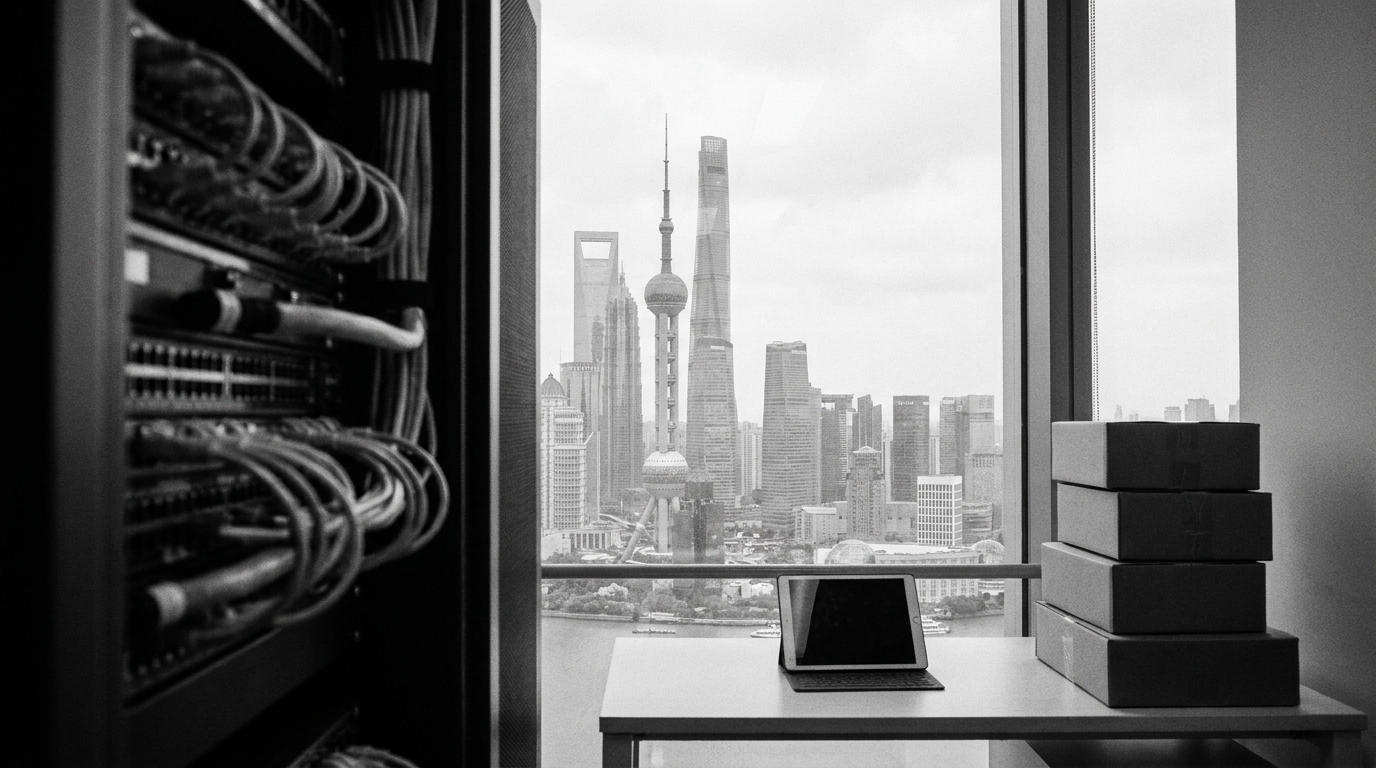
Three China tech earnings reports will test whether investors keep favoring platforms as the AI chip trade cools. Tencent, JD.com and SMIC report this week.
Tencent Holdings and JD.com are due to release results on Wednesday and Thursday, respectively, while Semiconductor Manufacturing International Corp. is expected to give investors a read on chip demand. The sequence matters because money has moved away from AI infrastructure stocks since late June and toward internet and consumer names.
Tencent and JD.com report
The shift has reversed part of the market pattern from the first six months of the year, when semiconductor-linked shares benefited from the AI buildout. Since the start of July, JD.com and Alibaba Group Holding have led gains on the Hang Seng Index after trailing earlier in the year, while SMIC has moved in the other direction.
The earnings will show whether stronger consumer-facing platforms can absorb higher AI spending without losing margin discipline. They will also indicate whether the market treats AI as a cost burden for internet firms or as a tool that can improve advertising, commerce and cloud operations over time.
Leonid Mironov, portfolio manager at Gavekal Capital, said the rotation may persist as investors compare different AI exposures. "It’s quite possible it will continue," Mironov said, adding that Alibaba and Tencent occupy a different position in AI than SMIC and other semiconductor companies.
JD.com profit versus SMIC margins
Analysts at HSBC expect JD.com to post second-quarter non-GAAP net profit of 8.7 billion yuan, or $1.29 billion, up 18% from a year earlier. HSBC attributed the expected gain partly to a narrower loss in food delivery as competition becomes more rational.
Citigroup analysts said Meituan may also deliver results slightly above forecasts if subsidy spending eases faster than expected. That would support the view that China’s internet platforms can defend earnings while still funding AI-related investments and new consumer services.
SMIC faces a different test. One market-intelligence estimate cited for the chipmaker said the company may struggle to meet its guided gross margin range of 20% to 22%, even as second-quarter sales are expected to rise 14% to 16% from the previous three months.
For SMIC, the market focus is likely to fall on third-quarter guidance and whether recent price increases can hold. If sales growth comes with weaker margins, investors may treat demand as less valuable than pricing power and capacity utilization.
AI spending divides the sector
The split reflects a wider question in China equities: whether AI capital spending is more attractive at the infrastructure layer or inside platforms that already have users, data and payments systems. Internet companies can use AI to support advertising tools, search, customer service and merchant services, but the payoff depends on whether those uses convert into revenue or lower costs.
Song Zhe, senior investment specialist at BNP Paribas Asset Management, said investors are likely to separate companies by execution rather than sector label. "We expect dispersion among China internet names, because the market will reward companies that can convert investment into earnings and defend margins, rather than simply announce a larger capex budget," Song said.
If Tencent and JD.com show earnings resilience, the rotation could support a more balanced Chinese equity market and help consumer-platform valuations recover from their first-half lag. For the companies, the mechanism would be margin defense; for the wider internet sector, it would raise the bar for proving that AI spending can produce measurable operating benefits.
If SMIC instead gives stronger margin guidance and firmer chip-demand signals, leadership could swing back toward hardware and AI infrastructure names. That path would point to continued capital spending across the technology supply chain, with a larger share of investor attention returning to foundries, equipment suppliers and semiconductor materials.
A third path is mixed results, with platforms showing profit growth while SMIC signals margin pressure. In that case, the global macro effect would likely stay contained, but China technology investors would become more selective, rewarding companies that can connect AI investment to cash flow rather than spending plans alone.