China manufacturing PMI slows as export firms lose pace
China manufacturing PMI data showed July factory growth cooled among export-oriented firms, aligning with official signs of weaker momentum.
Mei Lin ·
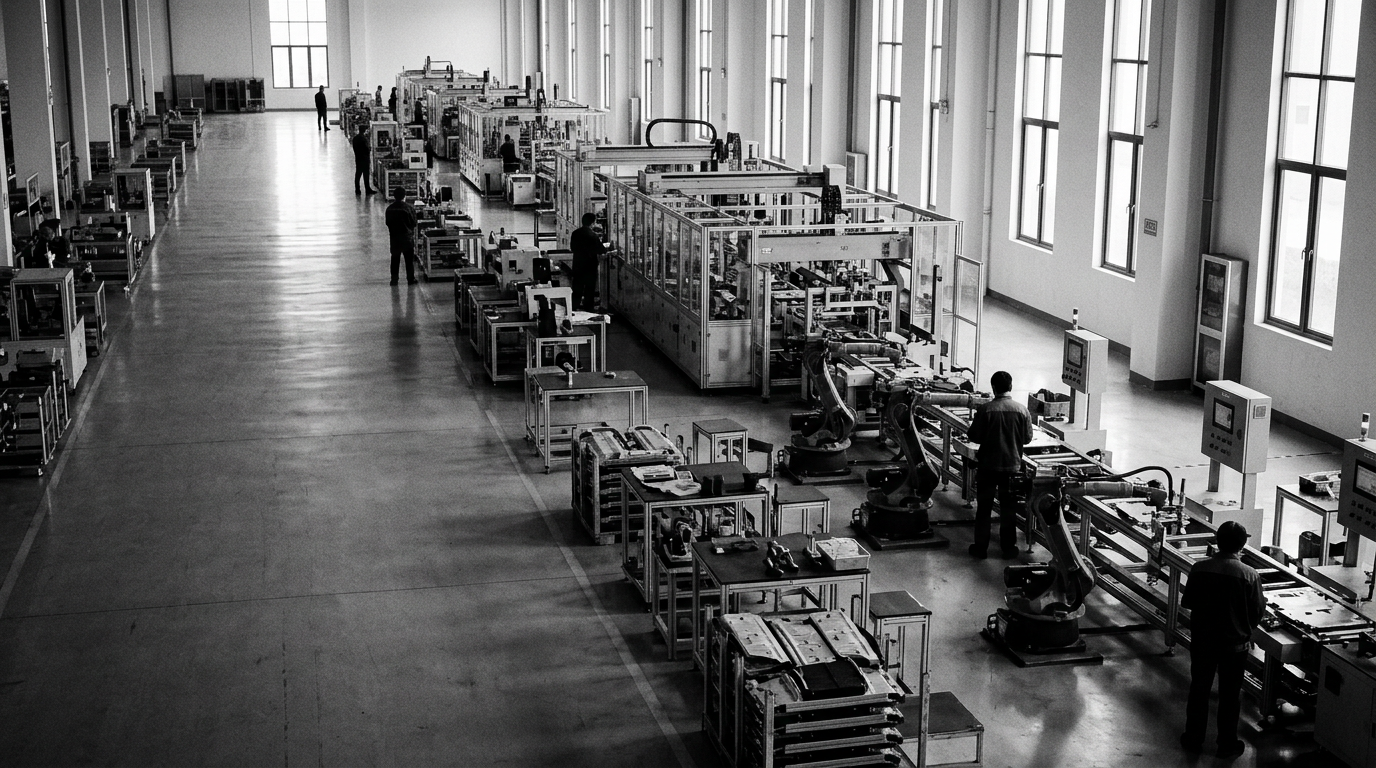
China manufacturing PMI data showed July factory growth cooled among export-oriented firms, aligning with official signs of weaker momentum.
July PMI loses pace
The RatingDog China manufacturing purchasing managers index fell to 50.9 in July from 51.7 in June, according to a Monday statement. The reading stayed above 50, the dividing line that signals an improvement from the prior month, but it missed a cited median economist forecast of 52.
The mix matters because the private survey points more directly at export-oriented firms than the official measure. A lower but still expanding reading suggests activity did not break outright in July, while the pace of improvement narrowed sharply from June.
For investors and policymakers, the direction of travel is the warning. A PMI above 50 still points to expansion, but a fall of 0.8 point in one month shows that the export side of Chinese manufacturing entered July with less force than expected.
Official gauges add pressure
The private gauge landed after official figures released Friday showed factory activity contracted unexpectedly for the first time in five months. The same official release showed construction weakening to its lowest level since the start of the pandemic, adding a domestic demand warning to the export-sector slowdown.
Taken together, the readings portray an economy losing speed on more than one front. Export-linked producers are still reporting growth under the private index, while the official factory gauge points to contraction and construction no longer offers the same cushion.
A PMI is a diffusion index, so it measures whether conditions improved or worsened from the previous month rather than the absolute size of production. That distinction is important in July: 50.9 is expansionary, but the direction and the miss against forecasts both point to softer momentum.
The 50 threshold also limits how far the private survey can be read. It does not, on its own, show a collapse in manufacturing; it shows that fewer conditions improved than in June and that the improvement was weaker than economists expected.
For export-oriented manufacturers, a cooling PMI can feed through hiring, purchasing and inventory decisions before it appears in headline output. If managers see orders soften, they can reduce raw-material buying or delay capacity plans, which then affects suppliers across industrial supply chains.
Construction adds a second channel. Weak building activity can weigh on demand for steel, cement, machinery and transport services, so the official construction slump matters even for firms not directly tied to exports.
Scenarios hinge on July follow-through
If the private PMI holds above 50 in coming months, the global macro effect would likely be a slower but continuing flow of Chinese manufactured goods rather than an abrupt supply shock. For RatingDog, that would keep its survey useful as an early signal of deceleration; for the wider manufacturing sector, it would point to margin pressure without a clear production break.
If the private reading falls below 50 and the official contraction persists, the mechanism changes. Global trade would face weaker Chinese factory demand for inputs, export firms would confront sharper order and cash-flow pressure, and suppliers tied to construction materials and industrial equipment would face a broader drag.
A third path is a split signal: private exporters remain in expansion while official measures stay weak because construction and domestically focused factories lag. In that case, the macro story would be uneven rather than uniform, RatingDog's export-heavy signal would attract more scrutiny, and industry pressure would concentrate in building-related supply chains.
The main uncertainties are whether the July readings mark a one-month pause or the start of a longer slowdown, and how much export demand can offset weaker construction. The next readings will matter because they can confirm whether the 50.9 print was a loss of speed inside expansion or an early step toward contraction.