China Is Considering a $295 Billion AI Buildout—and Nvidia May Be Left Out
The proposed infrastructure program reflects China's broader effort to reduce reliance on American technology.
Mei Lin ·
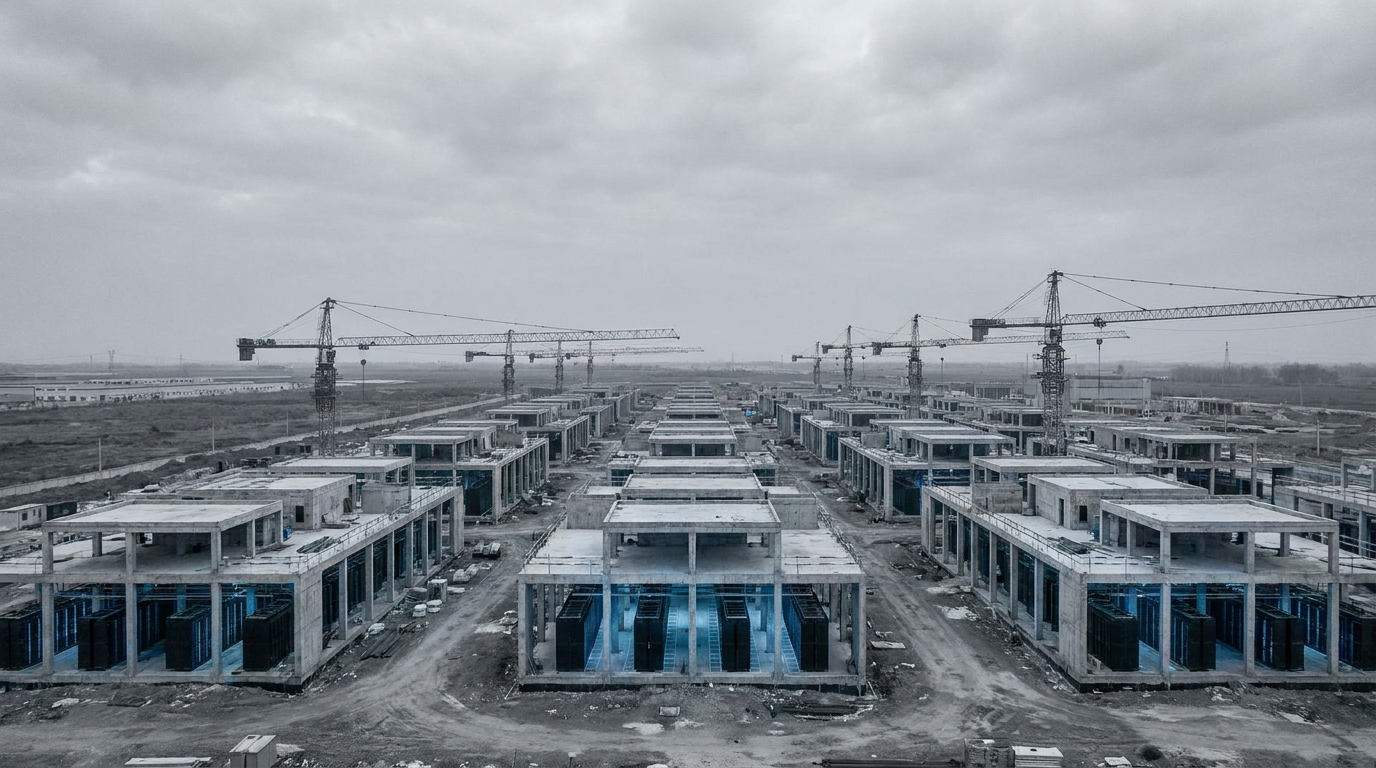
Chinese policymakers are developing plans for a nationwide data center expansion that could involve roughly 2 trillion yuan ($295 billion) in spending over the next five years. The initiative would establish a network of interconnected computing hubs designed to support artificial intelligence development across the country. Officials view computing power as a strategic resource, placing it alongside traditional infrastructure such as energy, transportation, and communications. If implemented as currently discussed, the program would become one of China’s largest technology infrastructure investments to date.
NDRC Shapes the Blueprint
Key government agencies, including the National Development and Reform Commission, are drafting the framework for the project, according to people familiar with the discussions. The plan envisions a coordinated national computing network rather than isolated regional facilities, allowing resources to be shared across provinces and industries. State-owned telecommunications giants are expected to play a central role in both operating and connecting the facilities. The goal is to create a unified platform capable of supporting increasingly demanding AI workloads.
China Mobile and Telecom Roles
The proposed network would rely heavily on major state-controlled operators including China Mobile and China Telecom. These companies already manage extensive communications infrastructure and are viewed as natural candidates to oversee large-scale computing assets. By leveraging existing networks, Beijing hopes to accelerate deployment while ensuring that computing resources can be distributed efficiently across different regions. Such coordination could help address uneven access to high-performance computing that currently exists among Chinese enterprises.
Huawei at the Center
A defining feature of the proposal is its emphasis on domestic technology suppliers. Officials are discussing requirements that at least 80% of critical technologies used in the network—including AI chips—come from Chinese companies. Huawei is expected to be among the primary beneficiaries of such a policy. The approach would significantly limit opportunities for foreign suppliers such as Nvidia and Advanced Micro Devices, whose advanced processors currently dominate much of the global AI market.
Extending a Familiar Playbook
The strategy reflects a broader pattern in Chinese industrial policy. Over the past decade, Beijing has directed substantial resources toward sectors considered strategically important, including telecommunications equipment, renewable energy, electric vehicles, and semiconductor manufacturing. Huawei itself emerged as a major beneficiary of state-backed support designed to strengthen domestic technological capabilities. The new computing initiative suggests that artificial intelligence infrastructure is now being elevated to a similar level of national priority.
Six Networks Framework Emerges
The data center proposal forms part of a broader government initiative known as the "Six Networks" program. The framework aims to expand essential infrastructure across multiple sectors, ranging from water systems and electricity grids to digital computing capacity. By placing AI-related infrastructure within a wider national development strategy, policymakers are signaling that computing power is increasingly viewed as a foundational economic asset. The move reflects the belief that future growth will depend not only on physical infrastructure but also on access to large-scale computational resources.
Markets React to the Prospect
Investors responded quickly to reports of the proposed spending program. Shares of GDS Holdings, one of China's major data center operators, rose sharply in premarket trading in the United States. Vnet Group also posted significant gains as investors assessed the potential benefits of a large-scale government-backed expansion of computing infrastructure. The market reaction highlights expectations that data center operators, equipment providers, and cloud-service companies could see substantial demand if the plan moves forward.
Funding Through Long-Term Debt
The initiative would be financed primarily through sovereign funding mechanisms, according to people familiar with the discussions. Officials are considering the use of ultra-long-term special government bonds, instruments that typically carry maturities exceeding ten years. State-backed investment funds focused on strategic industries would also contribute capital. Additional financing could come from commercial banks and private-sector investors, creating a blend of public and private funding sources to support the buildout.
AI Development Needs More Compute
The proposal addresses one of the most important constraints facing AI development: access to computing power. Advanced AI models require vast amounts of processing capacity for training, deployment, and continuous improvement. A national network could help companies access resources that might otherwise be concentrated among a small number of technology firms. By pooling infrastructure across regions, China could improve utilization rates while reducing duplication of investment.
Faster Model Iteration Across Industries
According to Charlie Dai, principal analyst at Forrester Research, a unified computing network could accelerate AI model development and support broader deployment of AI applications. Industries ranging from manufacturing and logistics to healthcare and finance increasingly rely on sophisticated AI systems that require significant computational resources. Greater access to centralized infrastructure could allow businesses to develop and deploy new services more rapidly. It may also support emerging categories such as autonomous agents and physical AI applications that integrate software with real-world operations.
A Response to Technology Restrictions
The initiative also carries geopolitical significance. In recent years, US export controls have restricted China's access to some of the world's most advanced semiconductors and chipmaking technologies. Those measures have intensified Beijing's efforts to cultivate domestic alternatives across the technology supply chain. By prioritizing Chinese suppliers within a massive state-backed infrastructure project, policymakers are attempting to reduce vulnerabilities created by dependence on foreign technology providers.
Debt Pressures Create Uncertainty
Despite the scale of the proposal, important questions remain unresolved. The plan is still under discussion, and its final structure, funding levels, and technology requirements could change before implementation. There is also the challenge of balancing aggressive infrastructure investment with broader concerns about rising government debt and slower economic growth. While Beijing appears determined to strengthen its AI capabilities, the success of the initiative will depend on whether domestic suppliers can deliver competitive technology at the scale required to support China's long-term ambitions in artificial intelligence.