China prioritizes industrial expansion over consumption boost
China’s Politburo is steering policy toward state-led tech and infrastructure investment, with H1 2026 retail sales up 1.3% versus 4.7% GDP growth.
Atlas Newsdesk ·
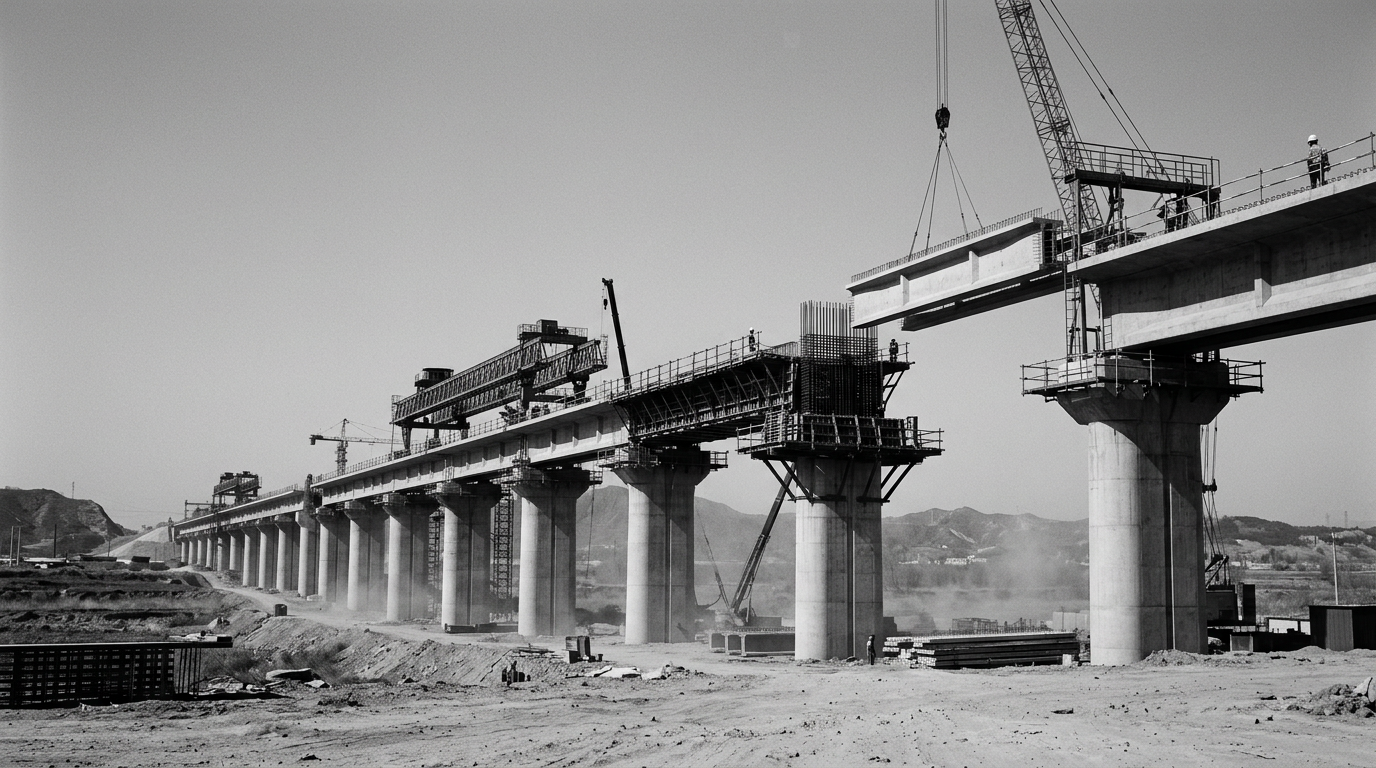
China’s Politburo has reaffirmed a policy path that favors state-guided investment in frontier technology and national infrastructure over direct steps aimed at lifting household consumption. The direction comes as official figures for the first half of 2026 show retail sales increasing 1.3 percent while GDP expanded 4.7 percent in the same period.
The difference between consumer spending growth and headline output adds to evidence of an approach that leans on production, investment, and industrial capacity rather than a consumption-driven rebound. Officials have described the strategy as a deliberate allocation of capital toward areas they consider central to national power.
Politburo keeps capital directed toward technology and infrastructure
Officials have framed the emphasis on technology and Officials have framed the emphasis on technology and infrastructure as a strategic priority, and the source material says resources will continue to be channeled toward industrial objectives even as domestic demand remains weak. In practical terms, the approach keeps the main policy levers in investment channels controlled or guided by the state. At the same time, Beijing has explicitly resisted calls for direct cash transfers or large-scale fiscal measures designed to close consumption shortfalls. The source material also says the leadership is not pursuing broad intervention to resolve what it calls the “unfinished” housing crisis through sweeping fiscal action. About 7 trillion yuan directed to “AI plus” and national networks Under the current policy emphasis, the government is steering around 7 trillion yuan toward “AI plus” initiatives and six national networks. As presented in the source, the plan is structured around capital-intensive spending intended to expand advanced technology capabilities and build out national-scale infrastructure.
Consumer-facing support is described as limited. Existing steps are focused on targeted trade-in subsidies for domestic goods, which the source characterizes as a form of indirect support for manufacturers rather than broad-based stimulus for households.
Weak demand and deflation pressure remain part of the picture The source material links the Politburo’s posture to continued reliance on a supply-side growth model while deflationary pressures and subdued consumer sentiment persist. With retail sales growth trailing GDP, the data indicates households are not driving expansion at the same pace as investment and industrial output.
According to the source material, the leadership is accepting the risk of a longer period of household stagnation in exchange for accelerating technological autonomy. In that framing, the trade-off is aimed at strengthening domestic capacity in priority sectors rather than waiting for a consumer-led recovery to take hold.
Export reliance raises trade friction risk
The source argues that the policy tilt could increase the likelihood of trade friction. As state-backed industrial expansion depends more on exports to compensate for weak domestic demand, overseas markets become more important for absorbing rising output.
Two uncertainties stand out in the source’s account: how quickly consumer conditions improve, and whether the housing crisis remains “unfinished” without large-scale fiscal action. For now, the first-half 2026 data and the Politburo’s stated preferences point to continuity in the current policy direction.