China carmakers push into US market despite Biden limits
Chinese automakers are entering the US and India via new partnerships, challenging restrictions on China-linked vehicle software and EV technology.
Atlas Newsdesk ·
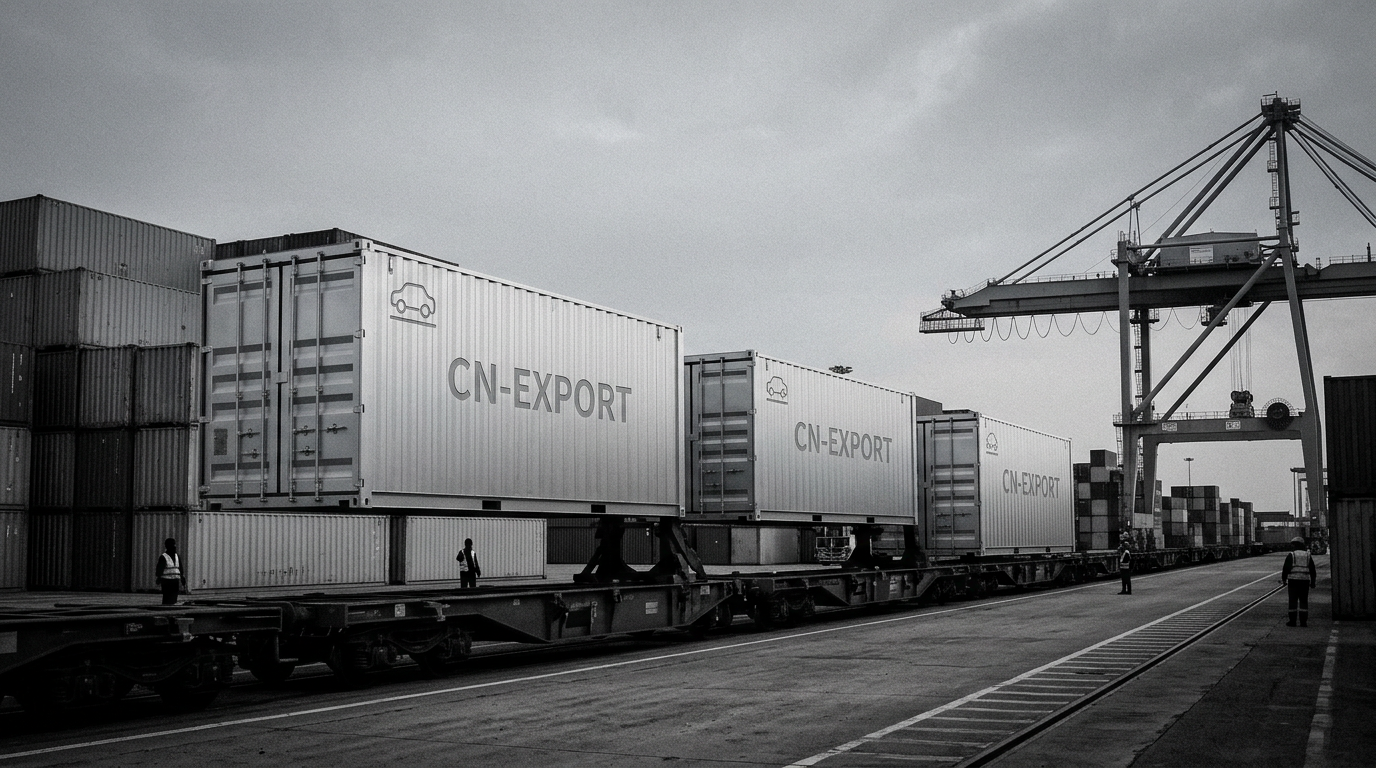
Chinese automakers are advancing into the US and India through partnerships and technology licensing, even as both countries try to limit China-linked vehicle tech.
The latest moves highlight how companies tied to China’s auto supply chain are using non-traditional routes—such as software vendors, autonomous-vehicle collaborations, and shared EV architectures—to reach markets where direct entry has been constrained.
US scrutiny meets a new playbook for market access
ECARX, an automotive technology supplier with origins in China, has entered a partnership with a Michigan-based autonomous vehicle company. The arrangement underscores how connectivity, infotainment and self-driving ecosystems can create openings even when finished vehicles face political and regulatory headwinds.
ECARX is also pursuing permission from the Trump administration to sell products in the United States. That effort comes after restrictions put in place during the Biden years that aimed to keep Chinese software and hardware out of vehicles operating on American roads.
The policy backdrop matters because modern cars function increasingly like networked computers, relying on integrated chips, operating systems, sensors, cloud links and over-the-air updates. In that environment, regulators treat components and code as strategically sensitive, not just mechanical parts.
India’s EV ambitions collide with dependence on Chinese platforms
In India, Tata Motors plans to manufacture electric vehicles using a car platform developed by China’s Chery. The plan illustrates a persistent challenge for New Delhi: limiting Chinese corporate presence is far easier than eliminating Chinese-origin technology from supply chains.
India has taken steps in recent years to curb Chinese companies and investment exposure, particularly in areas tied to strategic industries. Yet EV production depends on scalable architectures and proven engineering, and Chinese firms have built significant expertise in these building blocks.
For automakers, platform-sharing can shorten development timelines and reduce costs, particularly as price competition intensifies globally. For policymakers, it raises questions about where to draw the line—between a company’s ownership, its engineering origin, and the components embedded in the final product.
Domestic pressures in China push firms to test foreign limits
These overseas moves come as China’s auto sector grapples with slowing momentum and excess manufacturing capacity at home. With more factories and models than the domestic market can easily absorb, external demand and international partnerships become increasingly important.
A consultant quoted by The Wire China described a shift in approach among Chinese carmakers, saying they are “moving from caution to audacity” as they probe how far foreign rules can be stretched. The comment reflects a broader strategy of finding indirect market pathways when direct routes are blocked.
The implications are twofold. First, regulators in the US and India may face growing pressure to clarify definitions and enforcement around China-linked software, hardware and platforms in vehicles. Second, global automakers and suppliers could see competition intensify as China-associated technology continues to appear in products sold outside China, even when the branding or corporate footprint looks local.
Next steps will likely center on whether US authorities grant approvals sought by ECARX, and how India’s industrial policy responds as Chinese EV know-how becomes embedded in domestic manufacturing plans. Both cases will be watched as indicators of how resilient existing restrictions are in an auto industry increasingly shaped by software, electronics and shared architectures.