Cheng Li-wun begins two-week U.S. tour on Taiwan policy
Cheng Li-wun tours the U.S. to present the KMT's cross-strait stance, emphasizing Taiwan's constitution and a one-China framework to American policymakers.
Cuneyd Erdogan ·
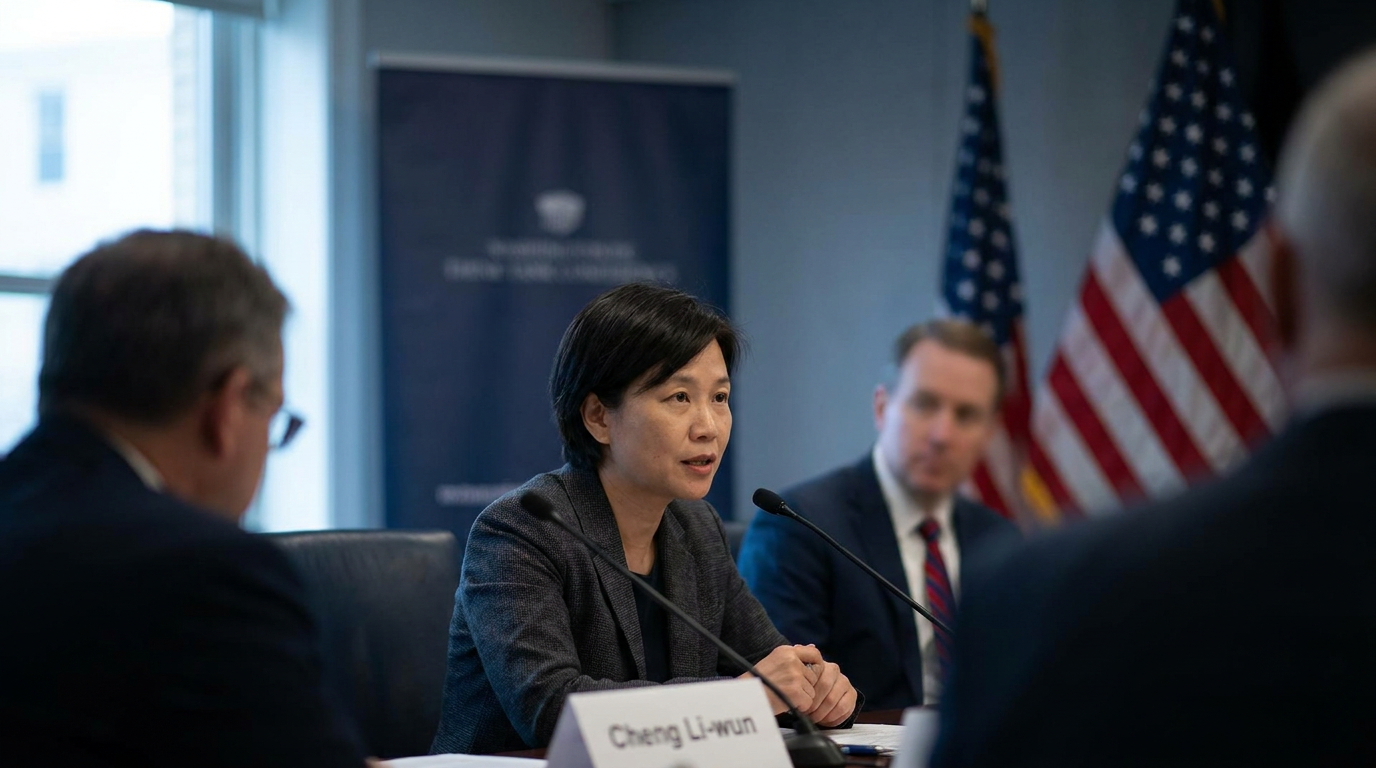
Two weeks, KMT chair Cheng Li-wun tours U.S. to pitch a one-China reading of Taiwan’s constitution as Beijing urges Washington to rethink support.
Kuomintang’s message meets Washington
Billed as a peace mission, the Kuomintang leader’s trip inserts Taiwan’s opposition into U.S.-China geopolitics. Her argument: under the Republic of China charter, Taiwan and the mainland are part of one China.
Cheng aims to reassure American policy circles that this constitutional framing can reduce cross-strait risk without conceding governance to Beijing. The message tracks with longstanding KMT positioning tied to the so‑called 1992 Consensus.
The timing is notable as Beijing presses the U.S. to temper backing for Taipei, according to reporting by Lingling Wei, Yoko Kubota and Joyu Wang. Taiwan is a democratically governed island that rejects China’s sovereignty claim.
Beijing pressure, U.S. policy lines
China has stepped up diplomatic and military pressure around the strait, including recent large-scale drills encircling the island following President Lai Ching-te’s inauguration. Beijing frames such actions as warnings against “separatism.”
Washington maintains a one China policy distinct from Beijing’s principle, governed by the Taiwan Relations Act and subsequent assurances. Those laws commit the U.S. to provide defensive arms and maintain capacity to resist coercion.
Cheng’s pitch arrives as Congress reviews defense cooperation, supply-chain de-risking, and semiconductor resilience. Taiwan’s chip sector underpins U.S. technology and defense ecosystems, elevating the stakes of any shift in American posture.
Domestic stakes in Taipei
At home, the KMT competes with the ruling Democratic Progressive Party on how to keep peace while preserving autonomy. The DPP rejects Beijing’s one-China framing and emphasizes Taiwan’s self-rule and international space.
By foregrounding the constitution, Cheng signals continuity with the Republic of China legal order while seeking room to engage Beijing. The gambit could broaden the KMT’s appeal to risk-averse voters and U.S. centrists wary of escalation.
Opponents warn that aligning with a one-China construct risks eroding Taiwan’s de facto sovereignty over time. Supporters counter that lowering the temperature with Beijing is essential for deterrence, investment confidence and supply-chain stability.
The tour targets policymakers and opinion leaders who shape U.S. commitments to the island’s security and economy. It also tests whether Washington will entertain messages calibrated to ease tensions without diluting deterrence.
Next steps hinge on how Cheng’s framing is received across Capitol Hill, think tanks and diaspora communities. Any resonance could influence legislative mood on arms deliveries, military training, and high-level transits—areas Beijing watches closely.
For now, the KMT leader is betting that constitutional language can anchor dialogue even as PLA activity and sharp rhetoric persist. Whether that formula can temper risk without inviting miscalculation is the question to watch.