CG Power JV output puts Indian electronics buyers on a new sourcing clock
News18 reports that CG Semi, a CG Power JV, has begun commercial production at its Sanand semiconductor facility, with the G1 facility carrying a stated 300M…
Edward Mullen ·
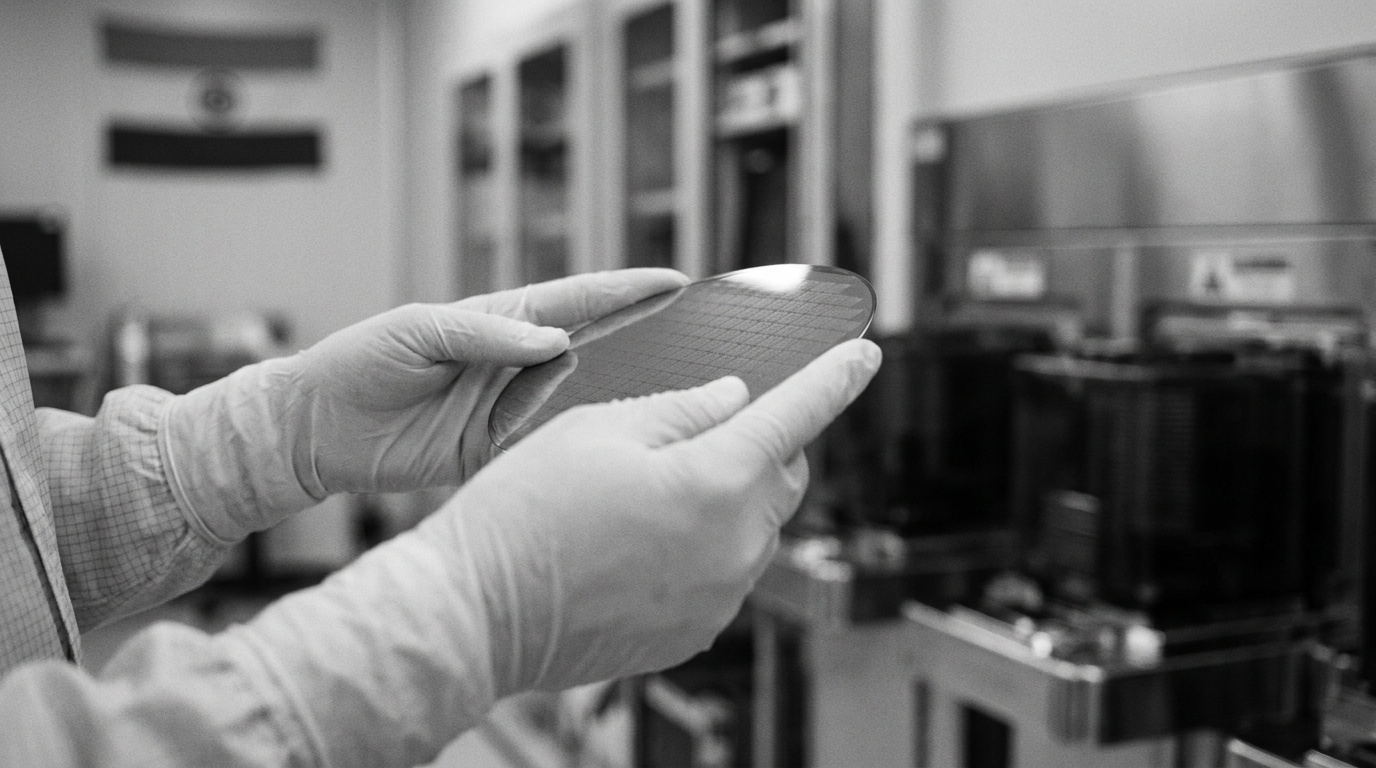
The prevailing view suggests India remains largely dependent on foreign technology, functioning primarily as an assembly hub in the semiconductor sector. However, the recent commencement of commercial production at CG Semi's Sanand facility challenges this static perception. For major electronics manufacturers, this event offers a new, tangible reference point, potentially catalyzing a significant shift in procurement strategies and reducing reliance on established import channels.
The share-price headline is the least useful reading
News18 framed the signal through the public-market lens: “CG Power Share Price In Focus On Monday After JV Starts Commercial Production At Gujarat Chip Facility.” That is a reasonable market prompt, but it is too narrow for executives who buy components rather than trade the stock. The commercial start matters because procurement teams make supplier decisions slowly, and a domestic facility with named annual capacity gives buyers something more concrete than policy ambition to take into negotiations with existing suppliers.
The thesis here is deliberately narrower than the usual India semiconductor story: within 24 months, India’s chip manufacturing build-out will shift domestic procurement margins from foreign reliance to domestically produced semiconductors. That does not mean the News18 item proves India has localized a full semiconductor value chain.
It means the first commercial-production signal changes the bargaining surface for Indian electronics manufacturers, especially if buyers can point to a domestic alternative when negotiating availability, lead times, and pricing with foreign-linked channels.
The 300M figure is capacity, not proof of leverage The load-bearing number in the News18 summary is the G1 facility’s 300M unit annual capacity. But executives should read that as a ceiling, not as a procurement guarantee. Capacity measured against what baseline, at what utilization, with what product mix, and with what yield profile is not answered in the reported packet; nor does the summary say whether the “unit” count maps cleanly to the parts domestic buyers most need.
That distinction is where the obvious celebratory read breaks down. A facility can begin commercial production and still take time to become a dependable supplier in procurement systems, because purchasing departments care less about national capacity than about repeatable delivery, approved specifications, price stability, and failure handling.
News18’s summary does not name customers, contract terms, actual shipped volume, pricing, input sourcing, or qualification status inside major electronics manufacturers. Those omissions matter more to the future of work than the launch ceremony because they determine whether procurement, quality, finance, and plant operations teams rewrite their supplier playbooks or simply add another monitored source.
PM Modi’s presence signals priority, not purchase orders PM Modi’s attendance gives the launch political weight, according to News18, and that matters in a sector where public policy can shape financing, infrastructure, and buyer confidence. But political presence is not the same as purchase-order conversion. The question for manufacturing leaders is whether a domestic chip facility becomes a practical sourcing option, not whether the launch fits a national-industrial narrative.
That is why the dominant consensus take — that India will remain largely dependent on foreign technology and manufacturing, functioning primarily as an assembly hub — may be too static. Once a domestic facility is in commercial production, even buyers that do not immediately switch suppliers may have a new negotiation reference point.
The margin shift starts before full substitution: it starts when an electronics manufacturer can ask an incumbent supplier to justify why imported parts should keep the same pricing, allocation priority, or delivery terms if a local alternative is moving from announcement to production.
The counter-read is that Sanand may not yet change dependence The serious counter-read is straightforward a single reported facility launch does not establish domestic semiconductor independence. News18’s summary does not provide independent confirmation, customer names, product categories, qualification data, yield performance, or evidence that India’s largest electronics manufacturers are changing sourcing behavior.
If the facility’s 300M annual capacity is concentrated in products that do not relieve the highest-friction procurement needs, the strategic impact could be far smaller than the headline implies.
This is the part the source is not saying. It does not tell us whether CG Semi’s commercial production will reduce import exposure for the buyers most constrained by semiconductor availability, or whether it will serve a narrower market while the most critical components remain externally sourced.
It also does not describe the broader incentive structure or the scale of investment beyond the JV itself, so the evidence for a sustained procurement shift rests on one reported production start, not a mapped supply chain.
The under-noticed worker is the procurement manager
For the future of work, the most immediate job redesign is not on the factory floor. It is inside sourcing, supplier quality, and finance functions at Indian electronics manufacturers. If domestic semiconductor production becomes a viable option, procurement managers will need to evaluate local supplier risk, negotiate dual-sourcing terms, and coordinate qualification with plant teams rather than simply route orders through established foreign-linked channels.
That changes the organizational center of gravity. Supply-chain teams gain leverage because supplier choice becomes a strategic question, not just a cost-control exercise.
Quality teams become more important because any local substitution has to survive qualification, returns, and reliability reviews. Finance teams will be asked to compare the apparent price of imported parts with the working-capital and continuity value of a domestic source, even though the News18 packet gives no price data to support a definitive answer today.
The likely beneficiaries, if the reported capacity converts into dependable supply, are domestic manufacturers that can use CG Semi as either a supplier or a negotiating counterweight. The exposed parties are not named in the article, but the category is clear: buyers and intermediaries whose commercial terms depend on a lack of credible local alternatives.
The under-noticed middle is the approval layer inside manufacturers — the people who decide when a new component source is safe enough to enter production plans.
The next evidence is contracting, not ceremony The signals that would move this from launch news to procurement leverage are concrete. Watch whether News18 or other reported outlets identify named customers for the Sanand facility, whether the G1 facility’s 300M unit capacity is matched by reported shipment volumes rather than launch capacity, whether domestic electronics manufacturers describe changes in sourcing from CG Semi, and whether future coverage adds detail on product categories and qualification.
If those signals do not appear, the safer reading is that the facility is politically and industrially significant but not yet strong enough to shift procurement margins at scale.
For now, the News18 item supports a limited but important claim: commercial production at CG Semi gives Indian electronics buyers a new fact to bring into supplier conversations. It does not yet prove a broad replacement of foreign semiconductor dependence. The procurement consequence will be visible only when buyers stop treating domestic supply as a policy aspiration and begin treating it as an approved source with measurable delivery, price, and quality performance.