Williams drops 2026 goals to address technical flaws
Williams drops 2026 goals as internal reviews show it remains behind targets; the team sits ninth with 11 points and is analysing flaws.
Atlas Newsdesk ·
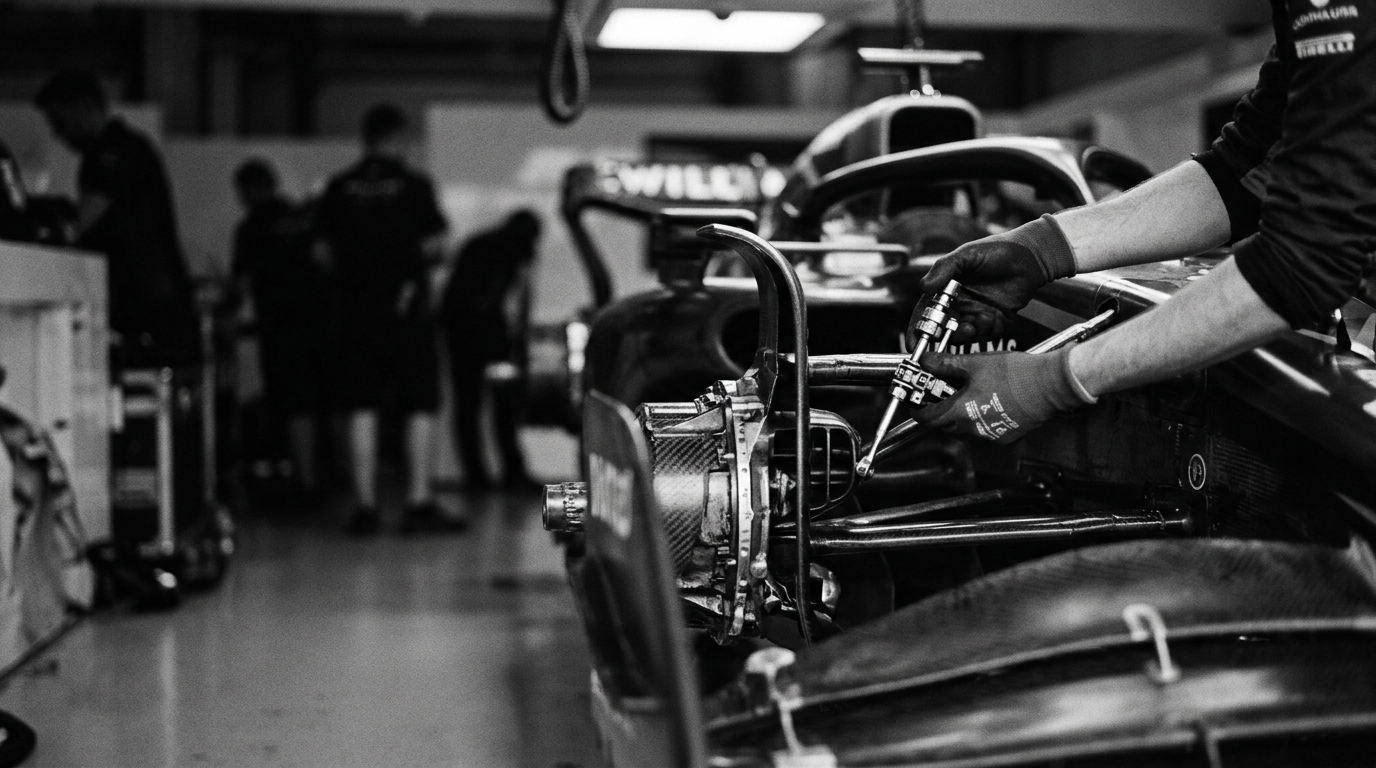
Williams Racing expects it will not meet the performance targets it set for the rest of the 2026 Formula 1 season, according to internal assessments referenced in the team’s latest status updates.
Even with a technical recovery plan now in place, the same evaluations indicate the organisation remains well short of its competitive objectives as the season continues.
Williams sits ninth as the recovery plan continues
The team is currently ninth in the constructors’ standings with 11 points, underlining the scale of the gap it is trying to close.
Officials describe the situation as a continuation of earlier challenges tied to adapting to the current regulatory cycle, which has made it difficult to reproduce the level of performance the team achieved in 2025.
Mid-season break used for intensive data work
During the mid-season break, management began what it described as an intensive phase of data collection and analysis aimed at reducing ongoing technical deficits.
Leadership has reported progress in isolating potential design improvements, but the emphasis of that work is framed as preventive—focused on ensuring that the operational failures seen this season are not repeated in future development cycles.
From short-term targets to long-term stabilisation
Rather than presenting the recovery plan as a near-term performance reset, the team has positioned it as part of a broader structural recalibration intended to stabilise its longer-term competitive direction.
In practical terms, Williams is treating 2026 as a season where learning, diagnosis, and correction must take precedence, even if that comes at the cost of previously defined benchmarks for the remaining races.
Limits of the current fix and what remains unclear Based on the team’s own assessments, the adjustments currently being pursued are not described as a complete solution for 2026 performance. They are presented mainly as steps to prevent a repeat of the same failures, suggesting that the full benefit is expected to be felt later rather than immediately.
Williams has not detailed which components or systems are driving the deficits, nor has it set out a revised public timeline for when the recovery plan should translate into points-scoring progress. For now, the team says it remains in a recalibration phase while it works to restore a stable platform for future development.
Implications
Country Impact: The update is primarily a team-level competitive and technical story, with no specific country-level measures or policies cited. Its significance is concentrated on Williams’ sporting performance and internal execution.
Industry Impact: Williams’ decision to prioritise root-cause diagnosis over near-term targets highlights how technical processes and development discipline can dominate outcomes under a regulatory cycle. The focus on preventing a repeat of failures suggests an emphasis on reliability of development pathways, not just immediate speed.
Market Impact: The team’s stance signals that expectations for near-term performance improvement may be limited while the recovery plan is oriented toward future cycles. No commercial, sponsorship, or financial figures were provided, so broader market effects cannot be quantified from the available information.