Burger King France acquisition cuts new-build demand and boosts renovations
Burger King France has agreed to acquire the Quick hamburger chain and plans to convert the existing Quick restaurants into Burger King outlets, according to…
Edward Mullen ·
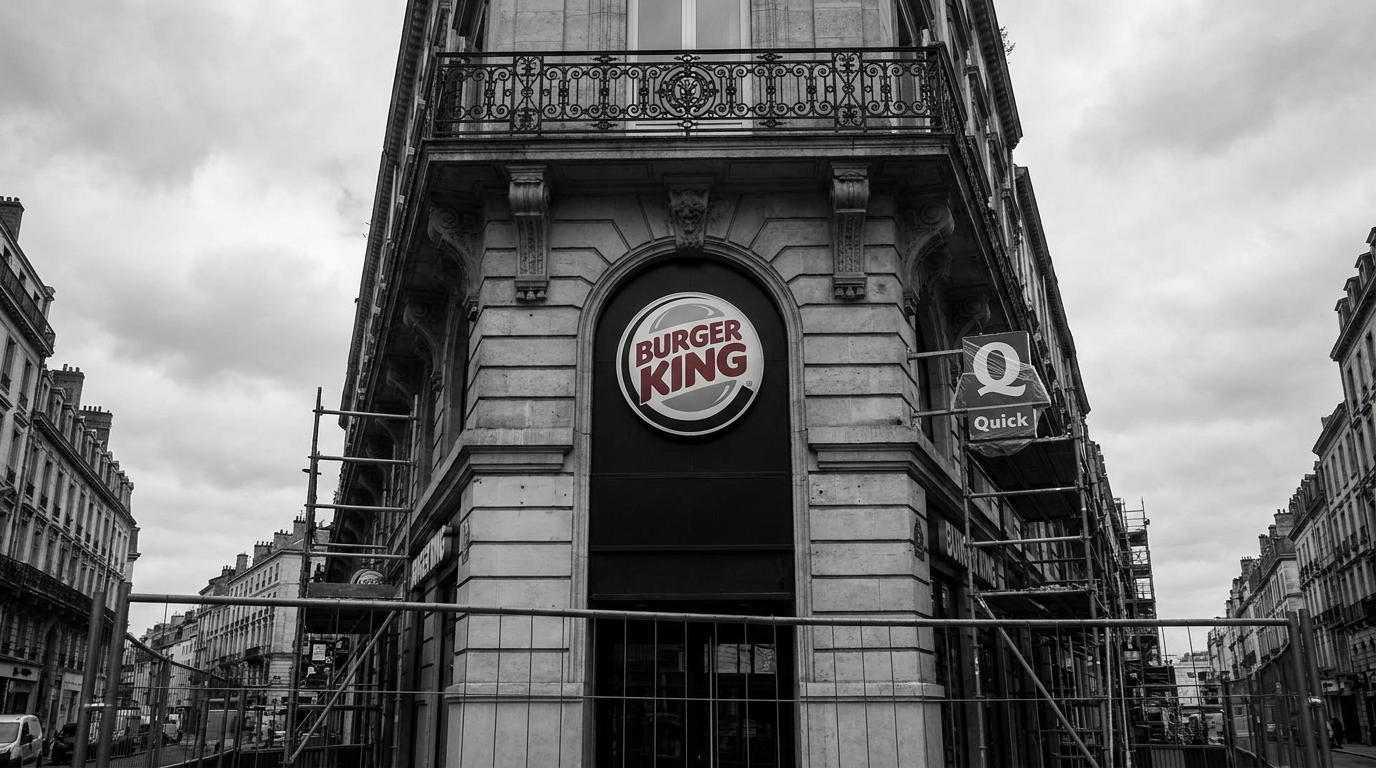
Many industry observers interpret quick-service restaurant acquisitions as an immediate boon for construction suppliers, anticipating a surge in new store development. However, the Burger King France acquisition of the Quick chain presents a different reality. This deal, framed around converting existing Quick locations, signals a critical reorientation: procurement emphasis is moving from traditional capital-intensive construction projects to operational expenditure for brand conversions.
The filing says convert, not build The investor announcement explicitly frames the deal around conversion: the company "plans to convert existing Quick restaurants into Burger..." rather than announcing a parallel program of new-ground-up store development. The language in the posting centers on rebranding and integrating Quick locations into Burger King's network, leaving the operational assumption that most value will come from reutilizing existing sites rather than financing new construction.
No one in the reported packet is on the record beyond the company statement.
Why the market reads it as expansion — and why that misses procurement risk Market observers will treat any acquisition that increases the count of brand-labeled outlets as a win for suppliers who build and equip fast-food stores, but that reading conflates two distinct procurement flows: ground-up new builds and conversions. A conversion retains much of the existing shell, utilities, and sometimes kitchen layout, so the procurement asks change from civil work, foundations, and long lead items to finishes, brand-specific equipment swaps, and shorter-duration fit-out contracts.
That flips capex-heavy work to opex-style renovation contracts and therefore compresses the opportunity for construction suppliers that price for full new builds.
Where margins bleed for the construction ecosystem
Ground-up construction typically embeds higher margins through earthworks, structural deliverables, and multi-trade project management; those line items are either absent or greatly reduced in a conversion. Fit-out vendors, kitchen-equipment suppliers, and signage contractors still have demand, but these are lower-ticket, faster-cycle jobs with more competition and thinner margins.
Franchisees and local developers negotiating the rebrand will prioritize speed-to-market and predictable outlay over bespoke construction, which shifts negotiating leverage away from traditional builders toward national roll-out fit-out firms and modular vendors. The announcement omits a capex vs opex split for the integration plan, leaving suppliers and procurement officers without the line-of-sight they need to price for the new work.
Why procurement teams should change how they buy
Procurement leaders at both franchisors and suppliers need to revisit contract templates, payment terms, and warranty language: conversion projects tend to favor lump-sum, shorter-duration SOWs with stricter completion milestones and higher penalties for delay, and they often push warranty risk back to the vendor. That means general contractors accustomed to spreads on long schedules will see revenue recognition and cash-flow profiles change.
For procurement organizations running RFP cycles, the relevant KPIs shift from schedule-driven milestone payments to throughput, punch-list velocity, and standardized SKU fulfillment. Those are different procurement levers than the ones used for capital-intensive greenfield projects.
The skeptical counter-read and the missing answers
A reasonable counter is that RBI or Qualium might still pursue aggressive net-new site growth alongside the Quick conversion program, using rebranded stores to seed market awareness before building bespoke Burger King sites in underserved catchments; the investor note does not, by itself, rule that out. The filing also does not quantify whether converted sites will require full equipment replacement or only cosmetic rebranding, which materially affects procurement spend.
Until RBI or Qualium state a clear rollout cadence and a capex/opex budget split, the supplier-impact thesis remains provisional.
Who benefits, who is exposed, and the under-noticed middle Procurement winners are likely modular fit-out providers, signage specialists, and national equipment distributors that can offer commodity swap-and-go services at scale; they win predictable, short-cycle contracts. Exposed are mid-size general contractors and local civil trades that rely on new-build pipelines to book multi-month, higher-margin projects.
The under-noticed middle — franchisees and regional developers — gain negotiating leverage, because conversions lower their upfront capital needs and give them optionality on whether to franchise, lease, or sell. The investor note does not disclose the capex vs opex plan or supplier transition timelines, which is the load-bearing omission procurement teams must demand answers to before renegotiating supplier panels.
Observable signals that would falsify or confirm this thesis in the next 12 months Watch for three concrete outcomes in public filings and supplier earnings: if Burger King France specifies a target share of new ground-up builds above standard conversion volumes, that would falsify the procurement-margin argument; if RBI or Qualium explicitly say the Quick deal's core aim is to increase net physical footprint rather than rebrand existing locations, the thesis weakens; and if a major construction supplier posts materially higher revenue tied to Burger King France new-site projects, then ground-up demand remains intact. Absent any of those signals, procurement teams should treat the Quick acquisition as a conversion-first play and reprice supplier panels accordingly.
No one in the reported packet is on the record to expand on these points, and the announcement itself lacks the granular budget and sourcing details procurement leaders need to act. That opacity is the practical problem here: the acquisition is reported; the supplier strategy is not.