NY20:38
    LDN01:38
    HKG08:38
    TYO09:38
    Gold4,531-0.51%
    Bitcoin77,008-0.12%
    Gold4,531-0.5%
    Bitcoin77,008-0.1%
    About
    Atlas 360
    SIGN IN
    LATEST NEWS
    DC adds 'Conventional Trash Days' dataset to Open Data portal for residents4 minutesWhere to Catch the Best Rooftop Views in D.C. Right Now4 minutesCDT and Cornell Urge Investment in Linguistic Diversity at UN AI Governance Dialogue4 minutesMayor’s Office Posts 'Thank You, DC Teachers' Message to Educators4 minutesWar Drama: Voices from Ukraine — Washington DC event May 12, 5–7 PM4 minutesDC.gov events hub: How the city’s official calendar connects residents to public programs4 minutesDHS events page highlights agency’s public schedule at its Washington campus4 minutesDistrict releases Wetland Program Plan 2026–2030 to guide local waterway protection4 minutesDDOT Issues Traffic Advisories Across D.C. for Week of Feb. 19, 20244 minutesUK faces a troop-deployment dilemma over Ukraine; France could pick up the slack4 minutesDC Department of Health Launches Influenza Surveillance Dashboard4 minutesDistrict Reasserts Leadership Council for a Cleaner Anacostia River4 minutesWhy Bulgaria’s new government is unlikely to become Putin’s EU proxy4 minutesDC.gov’s official events calendar lists city-run public meetings, programs and community gatherings4 minutesDC posts weekly TOPA filings for April 6–10, 2026 listing properties with tenant purchase rights4 minutesDC adds 'Conventional Trash Days' dataset to Open Data portal for residents4 minutesWhere to Catch the Best Rooftop Views in D.C. Right Now4 minutesCDT and Cornell Urge Investment in Linguistic Diversity at UN AI Governance Dialogue4 minutesMayor’s Office Posts 'Thank You, DC Teachers' Message to Educators4 minutesWar Drama: Voices from Ukraine — Washington DC event May 12, 5–7 PM4 minutesDC.gov events hub: How the city’s official calendar connects residents to public programs4 minutesDHS events page highlights agency’s public schedule at its Washington campus4 minutesDistrict releases Wetland Program Plan 2026–2030 to guide local waterway protection4 minutesDDOT Issues Traffic Advisories Across D.C. for Week of Feb. 19, 20244 minutesUK faces a troop-deployment dilemma over Ukraine; France could pick up the slack4 minutesDC Department of Health Launches Influenza Surveillance Dashboard4 minutesDistrict Reasserts Leadership Council for a Cleaner Anacostia River4 minutesWhy Bulgaria’s new government is unlikely to become Putin’s EU proxy4 minutesDC.gov’s official events calendar lists city-run public meetings, programs and community gatherings4 minutesDC posts weekly TOPA filings for April 6–10, 2026 listing properties with tenant purchase rights4 minutes
    Lifestyle

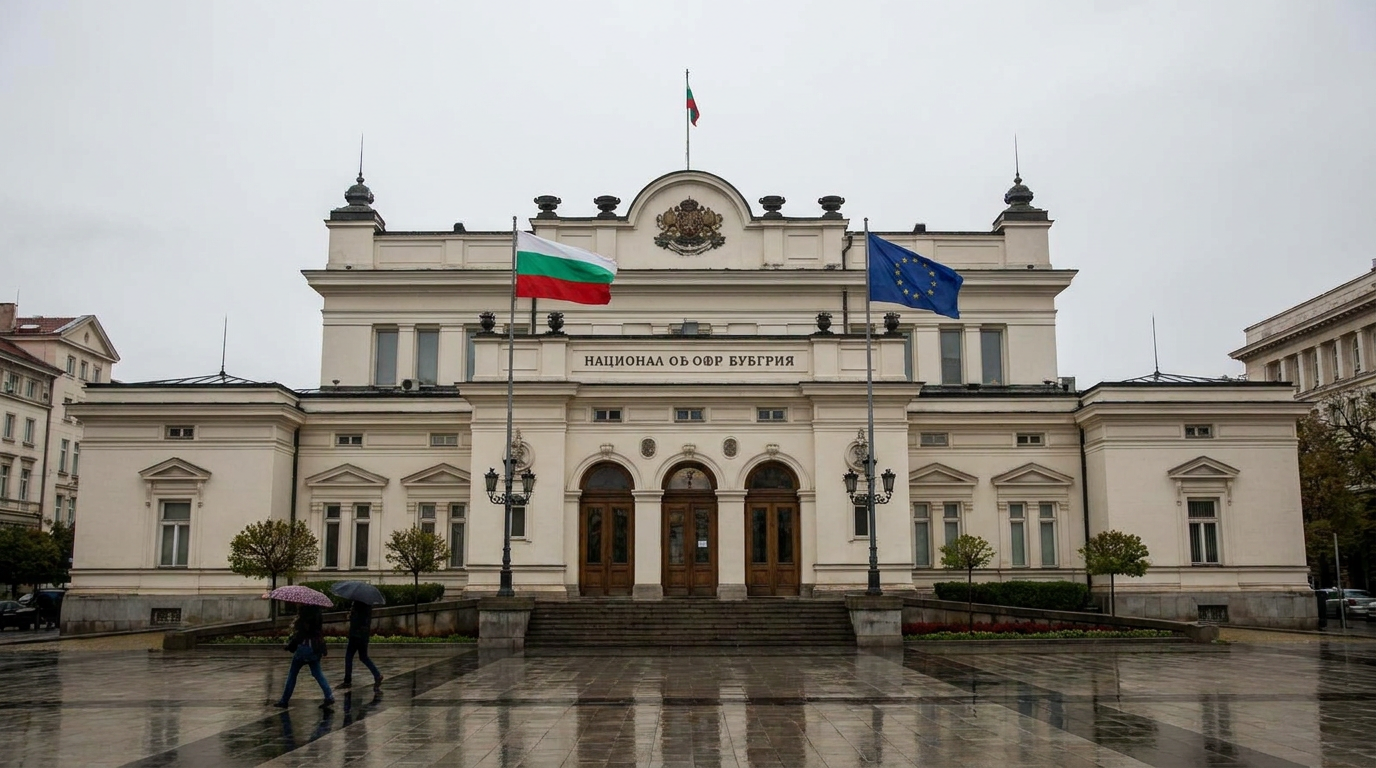
    Why Bulgaria’s new government is unlikely to become Putin’s EU proxy

    An Atlantic Council analysis argues Bulgaria’s incoming leadership is unlikely to replicate Hungary’s pro-Kremlin alignment. The piece highlights institutional limits, political composition, and strategic constraints that curb Moscow’s influence in Sofia.

    Published26 May 2026, 00:35:02
    Atlas AI

    Atlas AI

    Atlantic Council’s UkraineAlert published an analysis arguing that Bulgaria’s incoming government is unlikely to become a new Kremlin proxy inside the European Union. The piece assesses the political makeup of Sofia’s leadership and contrasts it with Hungary under Viktor Orbán, which Western analysts and some EU officials have long viewed as accommodating toward Moscow.

    The analysis points to several structural and political obstacles that make a Bulgarian pivot toward Russia improbable. It notes that the governing coalition lacks the consolidated, long-standing ties to Moscow that characterized Hungary’s ruling circle and that Bulgaria’s NATO and EU commitments, plus domestic political constraints, limit how far Sofia could move away from Western policy positions.

    The Atlantic Council also highlights internal divisions among Bulgarian parties and the relative weakness of pro-Russian networks compared with Budapest.

    How Sofia’s politics differ from Budapest’s

    The UkraineAlert piece emphasizes differences in party structure and political incentives. Hungary’s alignment with the Kremlin has been driven by a tightly centralized leadership that has tied foreign-policy orientation to domestic political strategy. By contrast, Bulgaria’s new governing arrangement reflects a looser coalition without a single dominant leader able to impose a long-term strategic realignment.

    That fragmentation raises the political cost of dramatic shifts on issues such as sanctions, energy policy, and NATO cooperation.

    The Atlantic Council also points to practical constraints: EU rules, shared defense obligations, and Bulgaria’s economic ties to the bloc make abrupt policy reversals difficult. Even where pro-Russian sentiment exists in Bulgarian politics and media, institutional checks and the realities of EU membership reduce the space for a full-scale foreign-policy pivot. The analysis treats rhetoric and political posture as distinct from durable alignment on high-stakes security questions.

    What Moscow would need versus what Sofia can deliver

    The article sketches what effective influence would require from Moscow and why those conditions are absent in Bulgaria. Securing an EU member state as a reliable partner typically requires long-term investment, aligned domestic political incentives, and a leadership willing to accept the economic and diplomatic costs of breaking with EU consensus. The Atlantic Council argues that Bulgaria currently lacks those converging factors at the level seen in Hungary.

    It also warns against overstating the stability of the current picture; Bulgarian politics have been fluid in recent years, and external shocks—energy crises, economic pressure, or elite realignments—could change incentives. Still, the near-term assessment is that Sofia is less predisposed to serve as a Kremlin foothold inside NATO and the EU.

    The analysis was published from a Washington-based think tank and is aimed at policy audiences tracking Russia’s influence operations across Europe. It frames the Bulgarian case as important not because Moscow has no presence in the country, but because the conditions that produced a steady pro-Kremlin partner in one EU capital are absent in Sofia.

    Watch for Bulgarian government votes, statements on EU sanctions, and moves on energy sourcing as the clearest near-term indicators of whether the country’s foreign-policy orientation shifts significantly.

    ## Why it matters to DC The Atlantic Council is a central Washington think tank; its analysis shapes briefings for policymakers, congressional staff, embassies, and defense planners who monitor Russian influence in Europe and its implications for NATO cohesion. ## Key details - Atlantic Council’s UkraineAlert argues Bulgaria is unlikely to replicate Hungary’s pro-Kremlin alignment. - Analysts cite Bulgaria’s fractured governing coalition and weaker pro-Russian networks compared with Hungary.

    - EU membership, NATO obligations, and economic ties constrain rapid policy pivots in Sofia. - The analysis warns that political volatility or external shocks could alter Bulgaria’s trajectory. ## What to watch Monitor Sofia’s votes on EU sanctions, public statements on Russia and Ukraine, and any major shifts in energy contracts or defense cooperation with NATO partners.

    Share

    Related Articles

    About this story

    Atlas360 covers Lifestyle as part of a broader effort to give international readers fast, source-checked context on global affairs. Our newsroom monitors original reporting from wire services, accredited correspondents and verified eyewitness accounts, then re-summarises the most important facts in clear, plain-language English so that you can understand both what happened and why it matters.

    Every published article on Atlas360 is reviewed for accuracy, balance and timeliness before it reaches the homepage. When new information emerges — for example a correction from an official source, a casualty update, or a clarifying statement from a named spokesperson — we update the story in place and keep the original publication time so readers can track how a developing situation evolves.

    If you want to keep following Lifestyle, you can browse the related coverage at the foot of this page, subscribe to the Atlas360 newsletter for a daily roundup, or open the relevant topic page where every story we have published on the subject is listed in reverse chronological order. Reader signals from the community feed also shape which threads we keep reporting on.

    DC DecoderSophie McAlister

    AI Editor

    Sophie McAlister

    Subscribe to DC Decoder

    A weekly intelligence brief on Washington — policy, power, and the people quietly shaping the city. Free. One-click unsubscribe.

    Atlas360

    Sign up for Atlas Daily

    The daily global news briefing you can trust.

    every weekday·Read it now

    or
    Sign in

    Already subscribed? Sign in and we won't show you this message again.