Blue Origin valuation pitch tests investor space appetite
Blue Origin is reportedly seeking $10 billion at a $130 billion valuation as Jeff Bezos’ space company tries to close SpaceX’s lead.
Jason Kwon ·
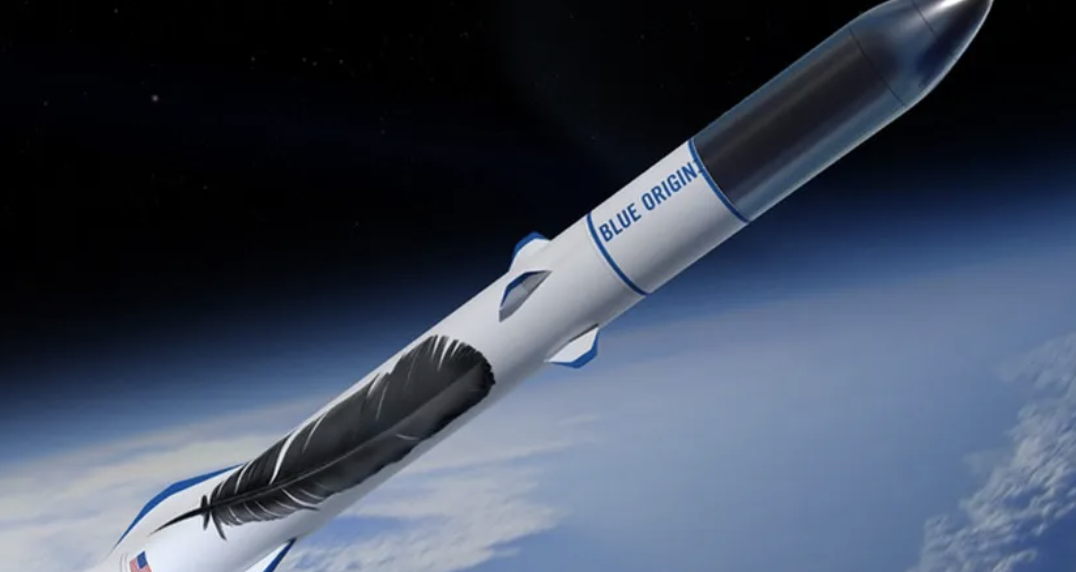
Blue Origin is reportedly seeking $10 billion at a $130 billion valuation to narrow SpaceX's lead and give space investors a clearer rival.
The fundraising effort would test whether investors see Jeff Bezos’ space company as a serious second pillar in a private launch market dominated by Elon Musk’s SpaceX. The case is less about matching SpaceX immediately than about buying time, capacity and credibility in a sector where reliability, government contracts and capital depth reinforce one another.
A $130 billion valuation test
The reported target gives Blue Origin a high bar before it has matched SpaceX’s launch cadence or reputation for smooth execution. The company has struggled with recent launch performance, according to the source material, while SpaceX benefits from an established head start and a much larger funding base.
That gap matters because launch markets reward proof more than promise. Every successful mission can lower perceived technical risk, support follow-on contracts and strengthen bargaining power with customers that need dependable access to orbit.
Blue Origin’s fundraising pitch also lands at a moment when investors are sorting pure space exposure from broader Musk-linked technology bets. SpaceX is framed in the source material as a company whose attention and capital are increasingly connected to rocket systems, GPU clusters and the AI model Grok, with further complexity possible if a Tesla combination is ever pursued.
Pure space pitch meets scale
For Blue Origin, the cleanest investor argument is focus. Unlike the broader constellation of Musk-linked businesses, Blue Origin can be presented as a direct bet on rockets, launch infrastructure and the commercialization of space access.
That argument has a precedent in consumer technology markets. The source compares Blue Origin’s position to Lyft against Uber: a smaller competitor that was often dismissed because of the leader’s scale, but survived by remaining a more focused mobility company.
The comparison has limits. Space launch is not ride-hailing, and the technical, regulatory and national security barriers are far higher. Still, the analogy captures the investor question: whether a second-place company can remain relevant by offering customers and governments an alternative to a dominant supplier.
The immediate effect on Blue Origin would depend on the terms and success of the raise. If the company secures the full amount near the reported valuation, it could gain more flexibility to fund engineering, launch infrastructure and contract pursuit without relying solely on Bezos’ backing.
Pentagon warning sharpens politics
The political case for Blue Origin may be as important as the commercial one. SpaceX is a major NASA contractor, and the source material says it lacks a strong commercial competitor in key areas of private-sector space work.
That concentration has already drawn attention inside the U.S. defense orbit. A group of civilian experts hired by the Pentagon in 2024 warned against “dependence upon a sole vendor” in dealings with private space companies.
The warning gives Blue Origin a strategic opening even if it trails SpaceX operationally. Government customers may value redundancy, supplier competition and political insulation, particularly in systems tied to communications, launch access and national security logistics.
Starlink adds another layer to that debate. The satellite network has expanded Musk’s influence beyond launch services, making private space infrastructure a factor in geopolitical decision-making as well as commercial connectivity.
Three paths for the raise
If Blue Origin raises the targeted $10 billion at the reported $130 billion valuation, the macro effect would be a stronger private-capital channel into space infrastructure. For Blue Origin, that would extend its runway and sharpen its pitch as the credible alternative; for the sector, it could reduce dependence on one dominant commercial provider.
If investors demand a lower valuation or a smaller round, the signal would be more cautious. Blue Origin would still gain capital, but the market would be marking down the speed at which it believes the company can catch SpaceX, while the wider industry would remain heavily tilted toward the incumbent.
If the fundraising effort stalls, the consequences would be broader than one company’s balance sheet. SpaceX’s lead would look harder to challenge, government concerns about sole-vendor reliance would become more difficult to solve through commercial competition, and private space investing could become more selective.
The open questions are specific: whether Blue Origin can improve launch reliability, whether investors will pay for a pure-play space story before the operating record catches up, and whether U.S. agencies translate concern about supplier concentration into contracts. Those answers will determine whether the reported raise becomes a reset for Blue Origin or another measure of SpaceX’s advantage.