Nebraska Wildfires Burn 600,000 Acres, State of Emergency
Nebraska wildfires have burned 600,000 acres, prompting Governor Pillen to declare a state of emergency as containment remains at 0%.
Ayla Demirhan ·
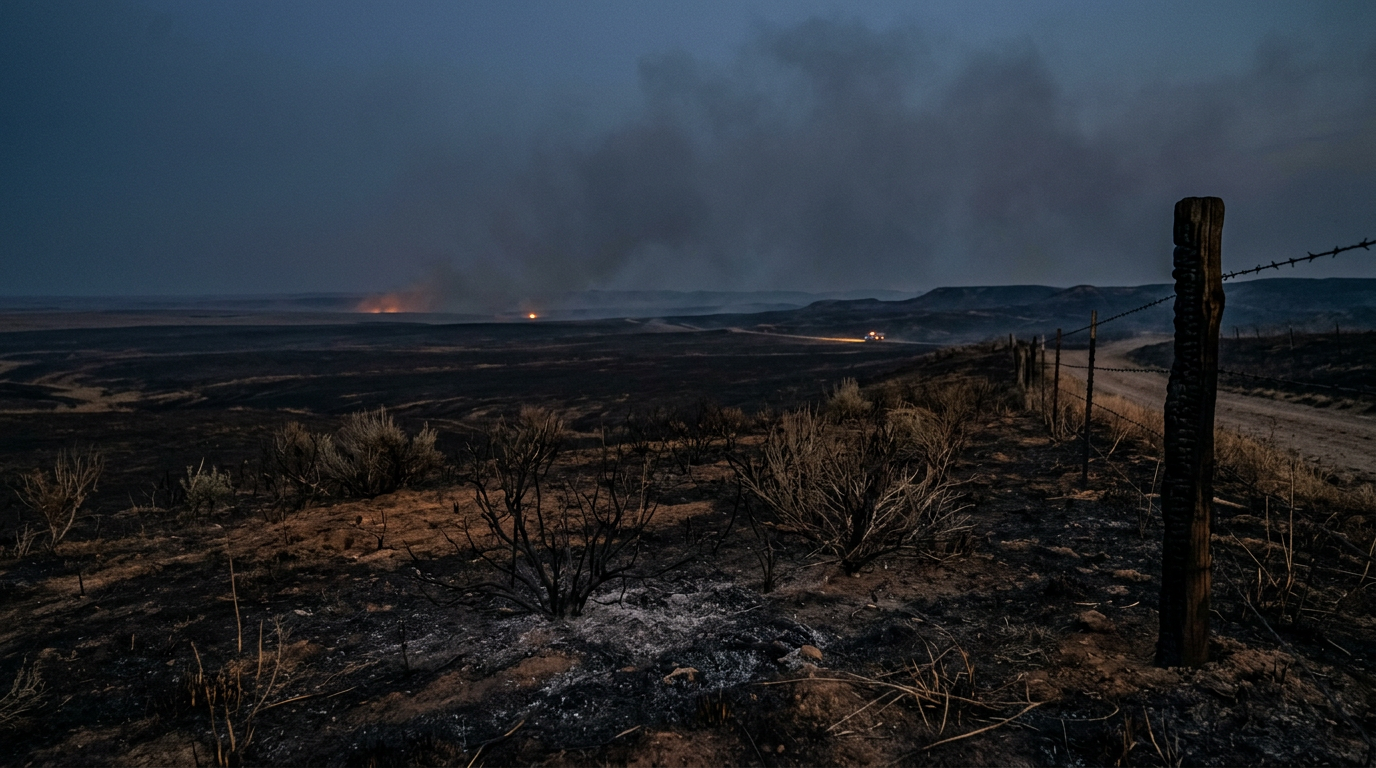
Massive wildfires have consumed approximately 600,000 acres across central and western Nebraska, prompting Governor Jim Pillen to declare a state of emergency. As of Sunday, March 15, 2026, containment efforts remain at zero percent, with dry and windy conditions forecast to complicate firefighting operations. The situation has led to the deployment of National Guard troops and specialized aircraft to support local emergency services.
Three primary fires are currently active. The Morrill Fire, the largest on record for Nebraska, has devastated over 460,000 acres across Morrill, Arthur, and Keith counties. This incident has tragically resulted in one fatality within Arthur County. The scale of this particular blaze underscores the severity of the current wildfire season.
In addition to the Morrill Fire, the Cottonwood Fire has burned approximately 100,000 acres in Dawson County. Further east, the Road 203 Fire has impacted more than 40,000 acres in Blaine and Thomas counties. These concurrent large-scale events are straining regional resources and requiring extensive coordination among various agencies.
Governor Pillen's emergency declaration facilitates the rapid deployment of state assets, including two UH-60 Blackhawk helicopters from the National Guard. These aerial resources are crucial for reconnaissance and water drops in inaccessible areas. The declaration also streamlines the process for requesting and receiving external aid.
Anticipated weather patterns, including a cross-country storm system moving through the Midwest, are expected to bring strong winds and low humidity. These conditions are highly conducive to rapid fire spread and present significant challenges for personnel on the ground. Firefighters are bracing for an intensification of the blazes.
Local resources from Omaha and Lincoln have been dispatched to assist, providing additional personnel and equipment. Governor Pillen has also indicated plans to seek further assistance from neighboring states, such as Iowa, to bolster the response. This multi-state coordination highlights the regional impact and the need for a unified approach to disaster management.
The current wildfires represent a significant environmental and economic challenge for Nebraska. Beyond the immediate threat to life and property, the long-term ecological impact on grasslands and agricultural areas will be substantial. The state's agricultural sector, a cornerstone of its economy, faces potential losses from damaged pastures and livestock. The extensive acreage burned also raises concerns about air quality and the potential for soil erosion in the aftermath of the fires.
The ongoing efforts focus on containment and protecting critical infrastructure and communities.
Implications
Country Impact: The extensive wildfires in Nebraska highlight increasing challenges for disaster response and resource allocation across U.S. states, potentially necessitating greater federal and inter-state coordination for large-scale environmental crises. Economic impacts on the agricultural sector could affect national supply chains.
Industry Impact: The agricultural sector, particularly ranching and farming in central and western Nebraska, faces significant losses due to destroyed pastures, livestock, and infrastructure. This could lead to increased commodity prices and insurance claims, impacting regional and national food production.
Market Impact: While localized, the scale of the disaster could prompt short-term market reactions in agricultural commodities. Increased demand for emergency services and reconstruction efforts may also influence regional economic activity and state budgets, potentially affecting municipal bond markets.