BESCOM power cuts push Bangalore tech firms toward local backup compute
Times Now reports BESCOM scheduled power outages across Jayanagar, Whitefield and Koramangala on July 22.
Edward Mullen ·
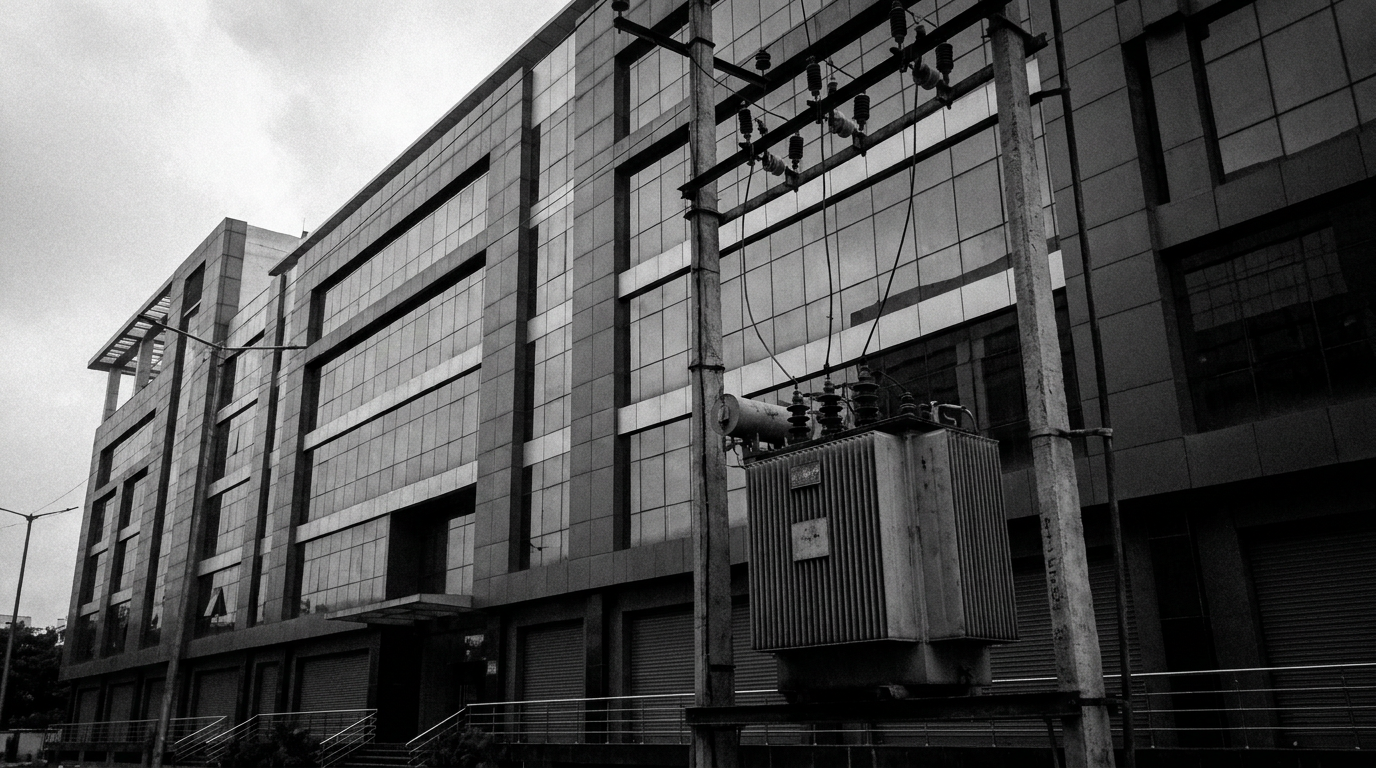
When BESCOM announced scheduled power cuts for July 22 across key tech neighborhoods like Jayanagar and Whitefield, it presented the disruptions as routine. For IT decision-makers, however, these frequent bulletins are not mere inconveniences. They are distinct market signals, quietly shaping procurement strategies and creating a persistent, latent demand for localized backup compute infrastructure in Bangalore.
What the notice actually says — and what it leaves out The Times Now item is sparse: it lists neighborhoods and describes the outages as scheduled for essential maintenance and grid upgrades. That phrasing frames the event as routine municipal work rather than evidence of chronic instability, but the article does not provide context on frequency, duration, or the longer-term reliability trends that affect compute buyers in Bangalore.
The omission matters because procurement teams make binary decisions—build local resiliency or rely on remote cloud redundancy—on the basis of trend data, not single-day bulletins.
Why scheduled outages create demand at the edge
For organizations running latency-sensitive services, AI training jobs, or on-premises databases, even predictable, scheduled cuts are operationally costly: jobs restart, caches cold, and SLAs slip. Those operational costs do not show up in the Times Now story, but they are the economic pressure that nudges IT leaders toward buying uninterrupted power and local compute capacity—UPS, batteries, on-site generators, or colocated micro-data centers—so that workloads can continue through maintenance windows without hitting cloud egress or recovery penalties.
This is a procurement dynamic that does not appear in the report but follows directly from recurring outages.
A hidden supply chain forms around reliability
If scheduled outages are persistent, procurement shifts in predictable ways: budgets move from pure cloud spend to hybrid architectures and hardware line items, local vendors of power equipment and small-scale colocation become strategic suppliers, and system integrators that can install and validate failover become gatekeepers. The Times Now article does not trace these downstream purchases, but the signal—scheduled outages in tech-heavy neighborhoods—maps cleanly onto increased demand for localized resiliency services.
That demand is a hidden supply chain: it shows up in procurement orders and vendor growth long after the municipal bulletin has been filed.
Who benefits, and who is exposed Local UPS and generator providers, micro-data-center vendors, and systems integrators stand to win recurring revenue from firms that treat grid maintenance as a business risk. Conversely, businesses that have built strategy around always-on central cloud regions without on-site fallback are exposed to operational disruption and potential contractual penalties.
The Times Now piece names the neighborhoods but does not connect the dots to these vendor classes, leaving executives with a surface-level alert rather than the procurement intelligence they need.
The obvious counter: scheduled maintenance could be upgrades, not chronic weakness A fair counter-read is that outages labeled "grid upgrades" may be part of a genuine modernization program that reduces future incidents. The Times Now article provides no longitudinal data to adjudicate between a one-off upgrade cycle and a pattern of recurring outages. Executives who accept the upgrade framing will delay local investments; those who treat the bulletin as emblematic of systemic limits will accelerate on-prem resiliency procurement. Both are defensible without better data.
Signals that will prove this hidden supply chain thesis wrong or right Watch whether BESCOM’s public reporting shifts from isolated outage notices to transparent trend data on outages and capacity upgrades; a clear, sustained falling trend would weaken the case for persistent localized demand. Equally determinative would be announcements from major cloud providers committing to large new regional capacity in Bangalore that emphasizes reliance on central infrastructure rather than on-site backup.
Finally, formal central-government smart-grid commitments with concrete funding and timelines would undercut the private-market arbitrage that drives the hidden supply chain. None of these appear in the Times Now story, which limits its value to CTOs making procurement calls today.
For executives in Bangalore or those contracting with Bangalore-based teams, the practical implication is immediate: treat municipal outage notices as a procurement input. The Times Now report names the affected neighborhoods and the stated reason for the cuts, but it does not supply the trend data buyers need to decide whether to invest in local resiliency now or wait for grid modernization to complete. That ambiguity is where opportunity and risk both hide.