Australia, Fiji sign defence pact to counter China
Australia and Fiji sealed a mutual defence treaty as Pacific security tensions with China sharpened.
Mateo Fernandez ·
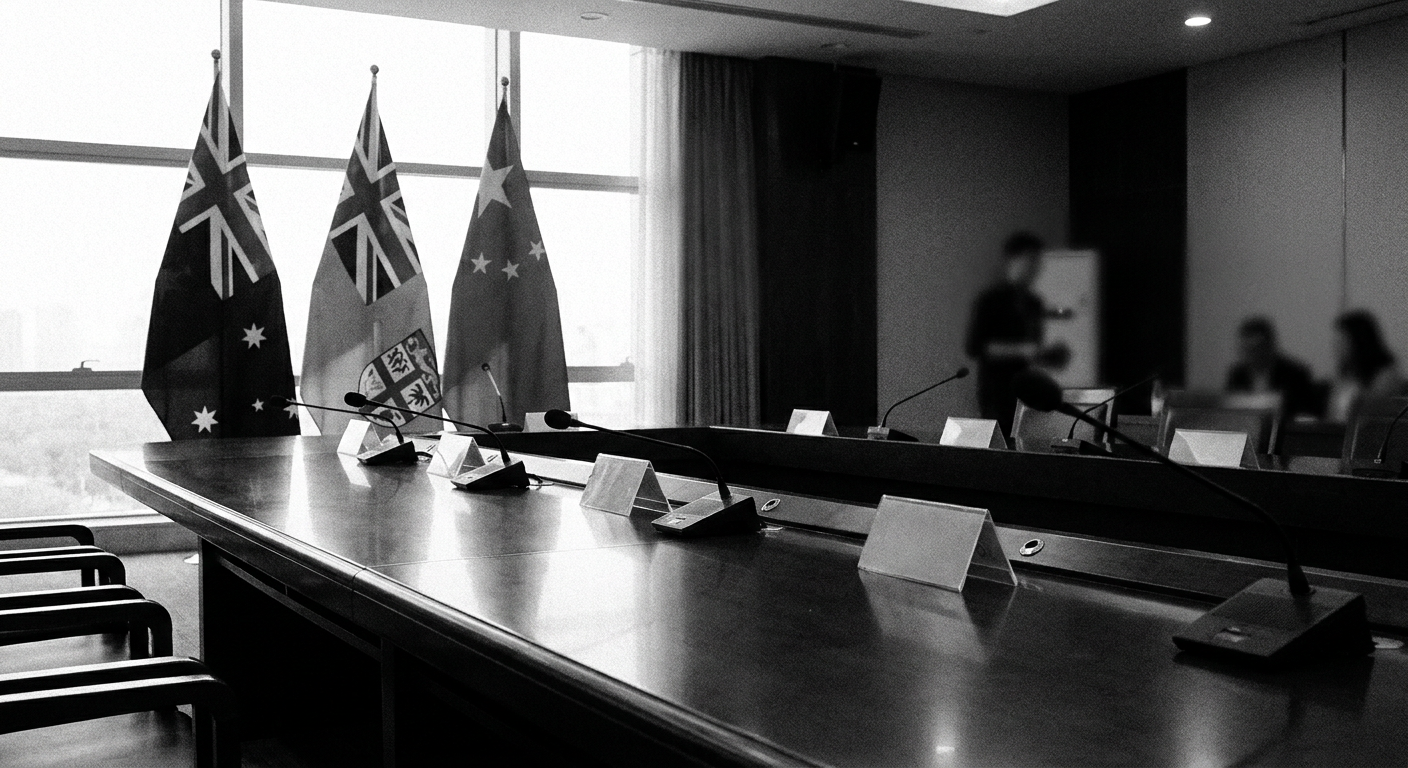
Australia and Fiji signed a mutual defence pact on July 6, 2026, tightening security ties between Canberra and Suva as competition with China in the Pacific intensifies. Reaction pending, with the event carrying geopolitical weight rather than an immediate market signal.
Officials said the treaty formalises mutual defence cooperation between the two Pacific partners. The signing came the same day Chinese state media reported that a submarine had test-launched a long-range ballistic missile in the South Pacific, a move Australia criticised.
Pacific pact tests Beijing’s reach
The agreement gives Australia another formal security anchor in the Pacific, where China has sought deeper diplomatic and defence relationships. For Fiji, the pact places its security relationship with Australia on a clearer treaty footing while keeping the island nation at the centre of regional power competition.
The missile report adds a sharper military context. A long-range ballistic missile launch from a submarine, if confirmed by officials, would signal China’s ability to project strategic capability into waters that Australia treats as central to its security perimeter.
The macro effect is indirect but important: higher strategic friction can raise defence spending pressure, complicate trade diplomacy and increase risk premiums around regional supply routes. For Australia, the pact strengthens its regional network; for Fiji, it may bring closer defence support while increasing scrutiny from Beijing.
The next 24 hours to July 7, 2026, will test whether China, Australia or Fiji release further details on the treaty text, the reported missile launch or any diplomatic protest.