Kyiv Region Drone Attacks Kill Twenty, Overwhelm Defenses
Early Saturday drone attacks in Ukraine's Kyiv region resulted in 20 fatalities and 42 injuries, overwhelming air defenses amid a broader aerial campaign.
Lauren Collins ·
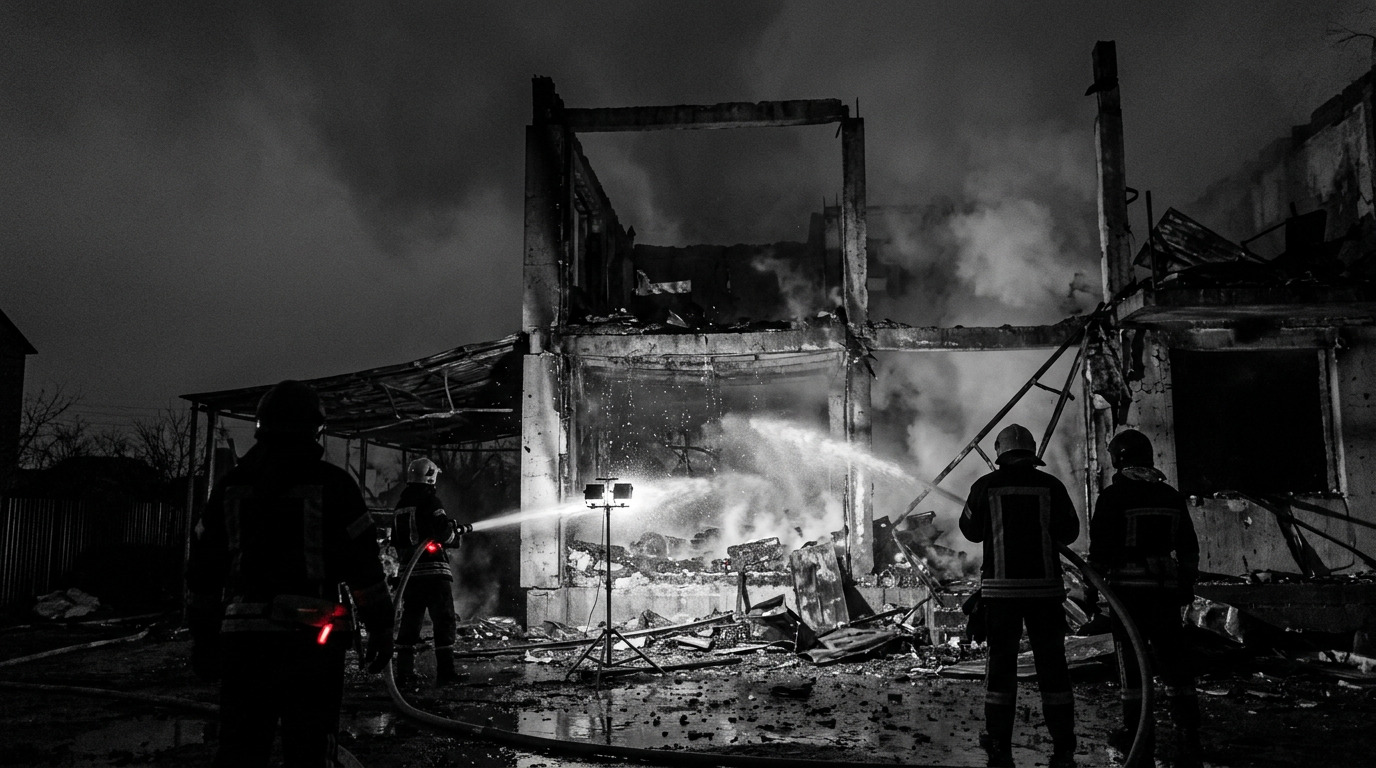
Early Saturday drone attacks targeting Ukraine's Kyiv region led to at least 20 deaths and 42 injuries, prompting the evacuation of 381 residents. The strikes primarily affected the Bucha and Boryspil districts, where emergency services initiated extensive search and rescue operations. These incidents formed part of a larger aerial campaign that simultaneously hit the Odesa, Dnipropetrovsk, Sumy, and Zaporizhzhia regions overnight.
Ukrainian military forces reported intercepting 233 unmanned aerial vehicles. However, the substantial volume of incoming munitions reportedly strained local air defense systems, particularly those defending the capital. This intensified drone activity signifies a notable escalation in the ongoing aerial conflict, reflecting a shift in strategic warfare tactics.
Intensified Aerial Warfare Tactics Emerge
The recent wave of drone attacks points to an increasingly aggressive phase of aerial engagement. These strikes coincided with Ukrainian operations targeting economic infrastructure within Russian territory. The attacks utilized a high-density drone saturation tactic, designed to deplete and overwhelm regional air defense capabilities through sheer numbers. Military analysts suggest this strategy could lead to a higher frequency of successful strikes, even against heavily fortified targets.
This strategic adjustment heightens the risk of civilian casualties, particularly in densely populated urban centers. The sustained nature of these operations across multiple regions indicates a coordinated, large-scale offensive strategy aimed at broad impact rather than isolated incidents. The deliberate overwhelming of defenses underscores a calculated approach to penetrate protected areas.
Focus on Critical Infrastructure Sustained
Observers anticipate continued instability and heightened military activity in the coming weeks. Both sides appear to be prioritizing long-range strikes against critical energy and logistics hubs. The primary objective of these operations is to degrade the opposing side's operational capabilities and infrastructure, thereby impacting their ability to sustain ongoing military efforts and supply lines.
This concentrated focus on strategic infrastructure highlights a broader strategy to weaken economic and logistical support for military actions. The shift toward attritional warfare, characterized by extensive drone deployments, is expected to maintain sustained pressure on both civilian populations and defensive systems. International bodies continue to monitor the humanitarian consequences of these escalating engagements closely.
Humanitarian Impact and Future Outlook
The strikes have necessitated immediate humanitarian responses, with search and rescue teams actively assessing structural damage in residential areas. The displacement of residents underscores the immediate human cost of this renewed intensity in aerial attacks. This operational tempo suggests that both nations are committing significant resources to these long-range engagements, indicating a protracted conflict.
Future developments are likely to include a continued emphasis on degrading enemy infrastructure, potentially leading to further civilian impact and increased demands on air defense resources. The ongoing evolution of drone warfare and counter-drone measures remains a critical aspect of the conflict, with both sides adapting their strategies in response to these technological advancements and tactical shifts.