AI Boom Fuels ASML's Soaring Revenue Forecast
ASML lifted its 2026 revenue outlook to 36–40 billion euros on April 15 after strong Q1 results, citing AI-driven demand for tools.
Jason Kwon ·
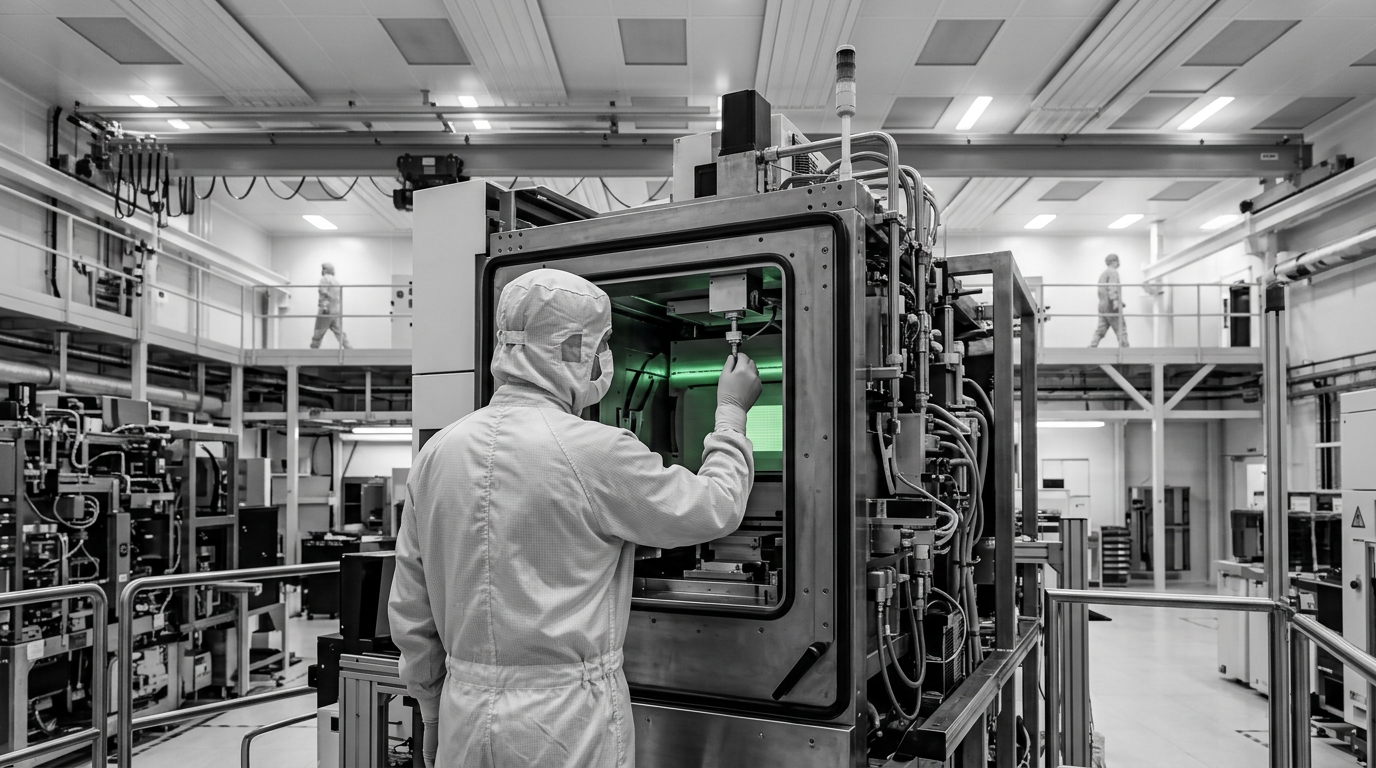
ASML, the world’s largest supplier of chipmaking equipment, on Wednesday, April 15, reported first-quarter earnings that beat expectations and raised its revenue outlook for 2026, citing stronger demand tied to advances in artificial intelligence (AI). The company is based in Veldhoven, Netherlands, and its tools are used by major chip manufacturers.
ASML said it now expects 2026 revenue of between 36 billion and 40 billion euros. That compares with its earlier guidance of 34 billion to 39 billion euros. Analysts had forecast 37.7 billion euros, according to LSEG data.
The company linked the higher forecast to faster capacity expansion plans by its customers for 2026 and beyond. ASML said demand for chips continues to exceed supply, a dynamic that is feeding into orders for its equipment. The company supplies critical tools to chipmakers including TSMC, which produces chips for Nvidia and Apple.
ASML is widely viewed as a key enabler of the AI-driven buildout in semiconductors because its most advanced lithography systems are required to make leading-edge chips. The company’s shares have risen 40% year-to-date, a move it attributed to rapid data center construction and a shortage of memory chips, both of which have supported demand for its products.
To address the increase in demand, ASML’s Chief Financial Officer said the company expects to ship 60 of its flagship low-NA EUV tools in 2026. That would be a 25% increase over 2025 shipments. ASML also said it expects to have the capacity to ship 80 such tools in 2027.
These extreme ultraviolet (EUV) lithography systems are central to producing the advanced chips used in AI applications. ASML said each tool costs approximately $300 million, underscoring the scale of capital spending involved across the semiconductor supply chain.