Applied Intuition's Dana claims it will shift industrial labor margins toward supervision
This is single-thread reporting — a16z.simplecast.com only, no independent confirmation.
Edward Mullen ·
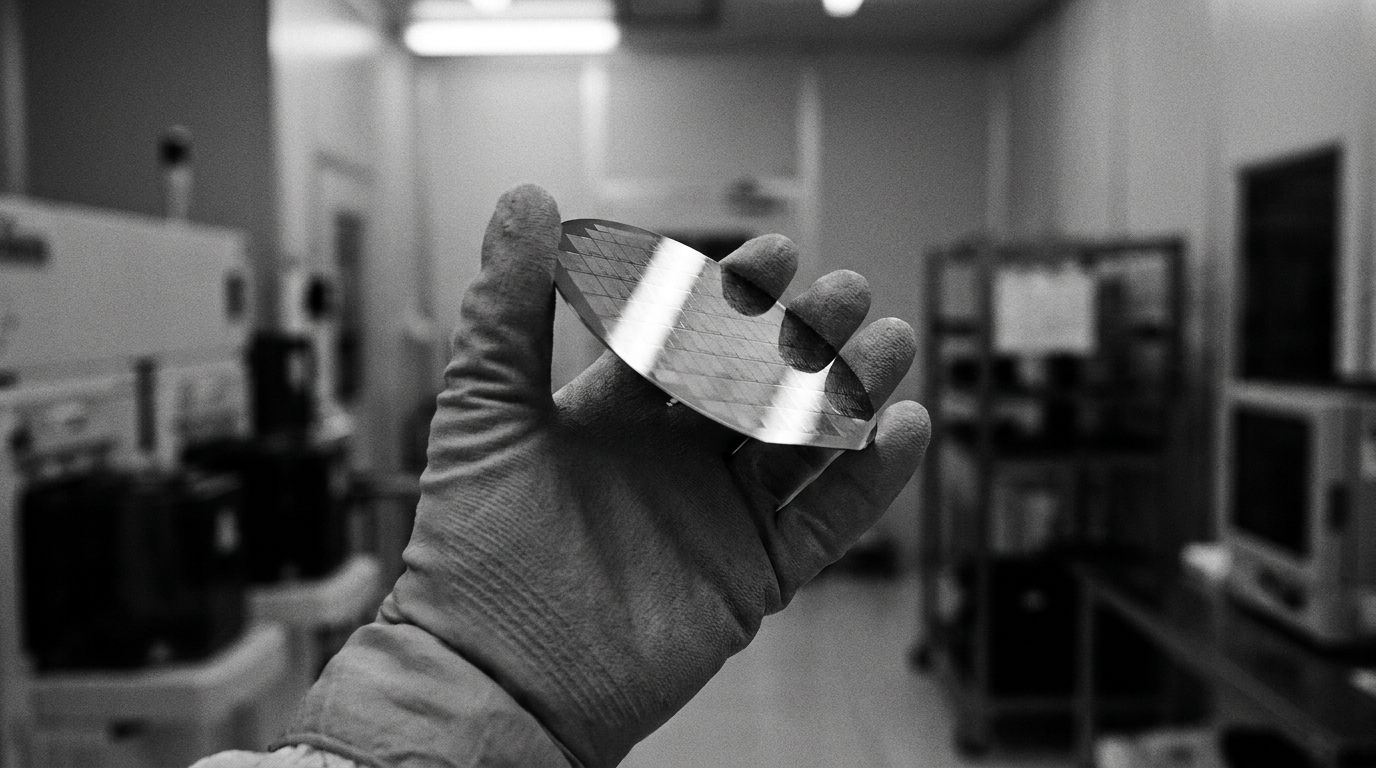
The prevailing narrative around physical AI suggests a future where automated systems operate autonomously, minimizing human intervention. Yet, the reality unfolding across industries tells a different story. Far from eliminating the need for human hands, these advanced systems are redefining it, compressing the value of repetitive execution while expanding the demand for sophisticated oversight and the specialized maintenance of complex machinery.
What Applied Intuition actually said about physical AI and Dana The guests framed physical AI as software that lets machines perceive and act in messy, unstructured environments; in that framing, Dana is presented as a platform to accelerate those capabilities for industrial actors. The podcast positions the economic case around broader addressable markets and higher-value outcomes than purely digital models, but it does not provide independent adoption data, third-party benchmarks, or hard unit economics to substantiate the claim.
This account is therefore a vendor-forward product narrative, not a validated market finding.
Why this is fundamentally a labor-margin story, not a pure displacement story Physical AI's value proposition, as described in the podcast, is built on moving tasks that were previously constrained by perception, localization, and safe actuation into software-managed flows. That does not map cleanly to replacing entire job categories; instead, it reallocates labor effort.
The more that sensing, perception stacks, and platform orchestration are productized, the more margins accrue to software ownership and system maintenance, and the less to repetitive execution tasks. In other words, companies that deploy Dana-like stacks will likely pay less for routine operator time and more for skilled oversight, integration, and on-call maintenance.
That margin reallocation compresses frontline labor costs while increasing the market value of supervisory and technical roles.
Where the vendor narrative understates the human work that remains The podcast's mainstream read — that physical AI is "the next frontier" with outsized economic impact — risks being heard by executives as permission to accelerate automation projects that assume minimal human involvement. That read doesn't grapple with variability, edge cases, regulatory constraints, and safety audits that make real-world deployments labor-intensive to set up and sustain.
The apparent omission is not technical ignorance but product positioning: vendors emphasize capability and market size while downplaying the ongoing labor tail—data labeling for edge cases, field calibration, incident investigation, and change-management staffing—that accrues after initial deployment.
What this changes for manufacturing leaders now
For a plant CTO or chief operating officer, the immediate consequence is procurement and head-count planning that shifts spend from headcount for repetitive execution to budget lines for integration engineers, site reliability teams for robots, and training programs for multi-disciplinary technicians. Procurement will favor platform-style purchases bundled with long-term support agreements, and HR will be asked to hire and retain a smaller set of higher-paid specialists rather than maintain large pools of entry-level operators.
That is a margin-structure shift: labor dollars move up the skill ladder, and vendors selling platforms and support capture a larger share of lifecycle spending.
The counter-read executives should weigh
A natural skeptical read — missing from the podcast itself — is that vendors oversell economic upside and underplay deployment friction. Critics could point to historical cycles where automation projects promised fast returns but delivered slower throughput gains because integration, human factors, and safety governance were underestimated.
If executives treat the Applied Intuition narrative as a straightforward efficiency lever without accounting for those non-recurring integration costs and ongoing supervision needs, they risk overrunning budgets and underdelivering on productivity.
What would falsify this thesis in the next 12 months The claim that physical AI re-prices margins toward supervision is falsifiable: if, by Q4 2025, a major industrial employer publicly reports replacing 50% or more of a manufacturing or logistics workforce with physical AI and shows no corresponding growth in oversight or maintenance head count, that would contradict the thesis; if, by H1 2026, there is a documented, significant uptick in accidents or systemic failures directly attributable to unsupervised physical AI deployments, the supervision argument weakens; and if major vendors like Applied Intuition publish roadmaps explicitly designed for fully autonomous, human-free industrial operations by 2026, that would also undercut the margin-shift claim. None of those outcomes is reported in the podcast.
Who benefits, who is exposed, and the overlooked middle Platform vendors and systems integrators benefit as capital and high-skill labor capture grow; experienced technicians and field engineers gain bargaining power. Entry-level operators and firms built on low-wage execution are exposed to compressed margins and a need to reposition their business model.
The overlooked middle is the new class of technical managers and on-call reliability engineers whose headcount will likely grow inside buyer organizations — they are the roles that will determine whether these projects deliver sustained productivity improvements or become expensive pilots. Applied Intuition's presentation on the a16z Show offers a vendor's route map to that future, but executives should budget for the human tail that the product narrative does not fully quantify.