AI power demand drives record $11.6B clean-tech IPOs
AI power demand is accelerating a record clean-tech IPO wave in 2026, with firms raising $11.
Atlas Newsdesk ·
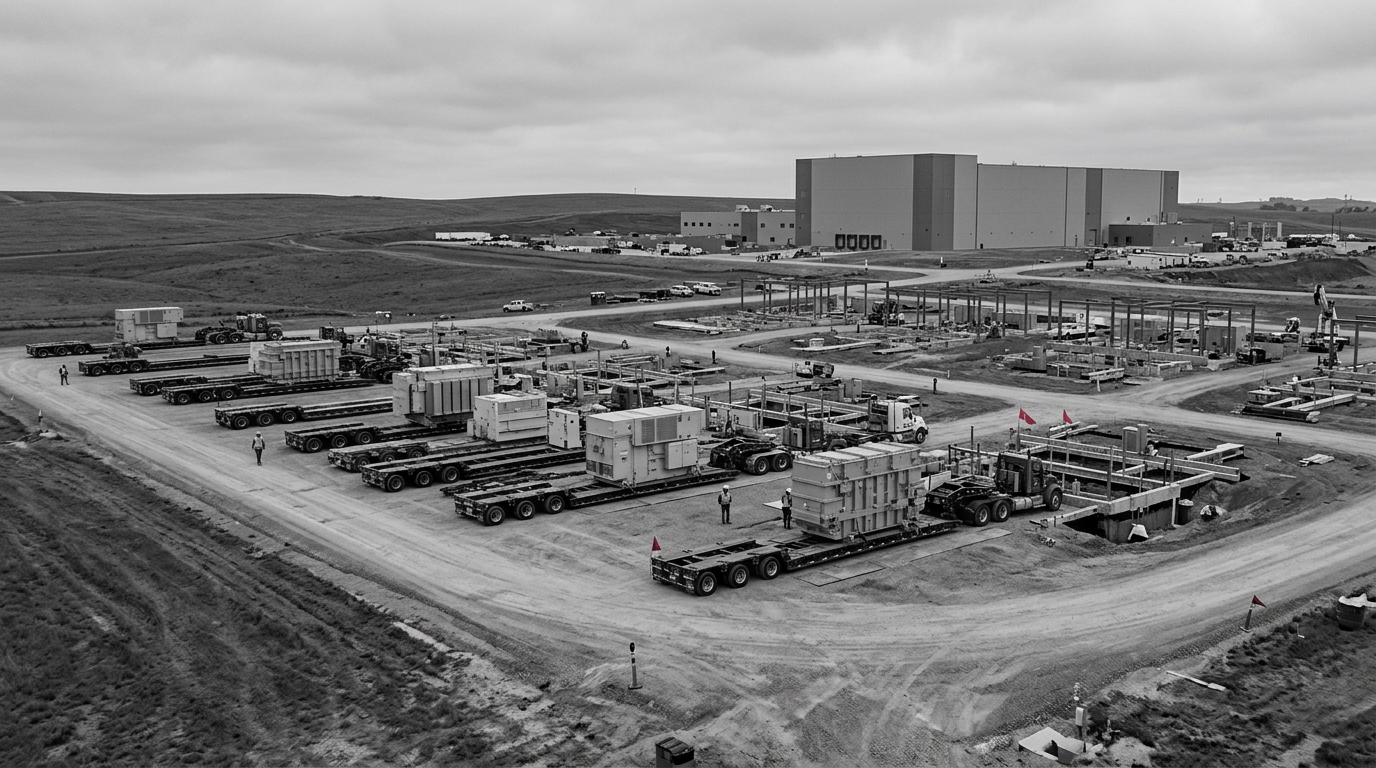
AI power demand is reshaping US capital markets, pushing energy and grid-focused companies into a record IPO sprint as data centers expand. At least 10 power infrastructure and clean-technology firms have listed so far in 2026, raising more than $11.6 billion in the largest year on record for the sector.
The rush is tied to the rapid buildout of computing hubs that support artificial intelligence. BloombergNEF estimates US data centers will require more than 77 gigawatts of capacity by 2030, up from 41 gigawatts in 2025.
Record fundraising follows data-center load forecasts
Public offerings are increasingly being framed as a response to a physical constraint: electricity supply, not chips, can set the pace for AI expansion. The 2026 fundraising total reflects both money raised and payments to underwriting banks, according to Bloomberg data.
One of the year’s most-watched debuts came from geothermal developer Fervo Energy Co., which gained about 35% in its first session as a public company. Fervo’s listing highlighted how investors are seeking generation sources that can run around the clock, a key consideration for data centers that operate continuously.
Still, the bullishness is not limited to geothermal. The broader set of listings spans power infrastructure and emerging clean technologies, reflecting investor interest in anything that could expand supply or make grids more reliable for large, concentrated loads.
High-risk bets return to public markets
The surge comes with notable volatility warnings. Wild price swings in SpaceX shares after Elon Musk’s aerospace and AI conglomerate reached public markets have underscored how quickly sentiment can turn when expectations are high and execution risk is significant.
Jeff Osborne, a managing director at TD Cowen, said the sector is likely to produce starkly different outcomes across issuers. “You’ll have likely some winners and roadkill along the way,” he said.
The dynamic is familiar to earlier clean-tech cycles: large addressable markets attract capital before technologies mature, and public investors end up underwriting long development timelines. In the current wave, the AI buildout is acting as the demand shock that makes experimental or pre-commercial solutions look investable.
Hyperscalers and policy tailwinds shape the next phase
Large technology companies are helping set the tone for risk appetite. Cash-rich firms such as Meta Platforms Inc., Amazon.com Inc. and Microsoft Corp. have the balance sheets to sign long-term supply arrangements and tolerate early-stage execution risk, supporting a pipeline of projects that smaller buyers might avoid.
Jefferies analyst Julien Dumoulin-Smith said the next leg of investment is being “led and enabled by the hyperscale community,” referring to major cloud and platform companies. He also described the current moment as the product of years spent moving technologies closer to commercialization and securing buyers for future output.
When private funding cannot cover the cost of scaling infrastructure-heavy technologies, the public market becomes a financing backstop, even for businesses that are not yet profitable. Fervo, for example, raised $1.89 billion from investors in May despite its geothermal approach not yet operating at full commercial scale.
Fervo Chief Financial Officer David Ulrey said newer technologies do not always have the same access to traditional funding channels. That financing gap, combined with rising data-center demand, is helping explain why investors are embracing listings tied to power generation and grid capacity.
Policy signals are also shaping investor expectations. Geothermal developers have benefited from support from the White House, while President Donald Trump has been especially vocal about expanding nuclear power as an electricity source for data centers.
Even technologies that face political criticism, including wind and solar, can still draw market interest when pitched as near-term contributors to data-center supply. The next test for newly listed companies will be execution: converting capital into operating assets before forecasts for AI-driven power demand are revised or competing solutions arrive.