A New Epidemic? Why Experts Say the Hondius Outbreak Is Alarming — but Not That
Hantavirus outbreak on a cruise ship: 3 dead, 7 ill. Rare, rodent-borne virus may spread between passengers. Learn what this means.
Ayla Demirhan ·
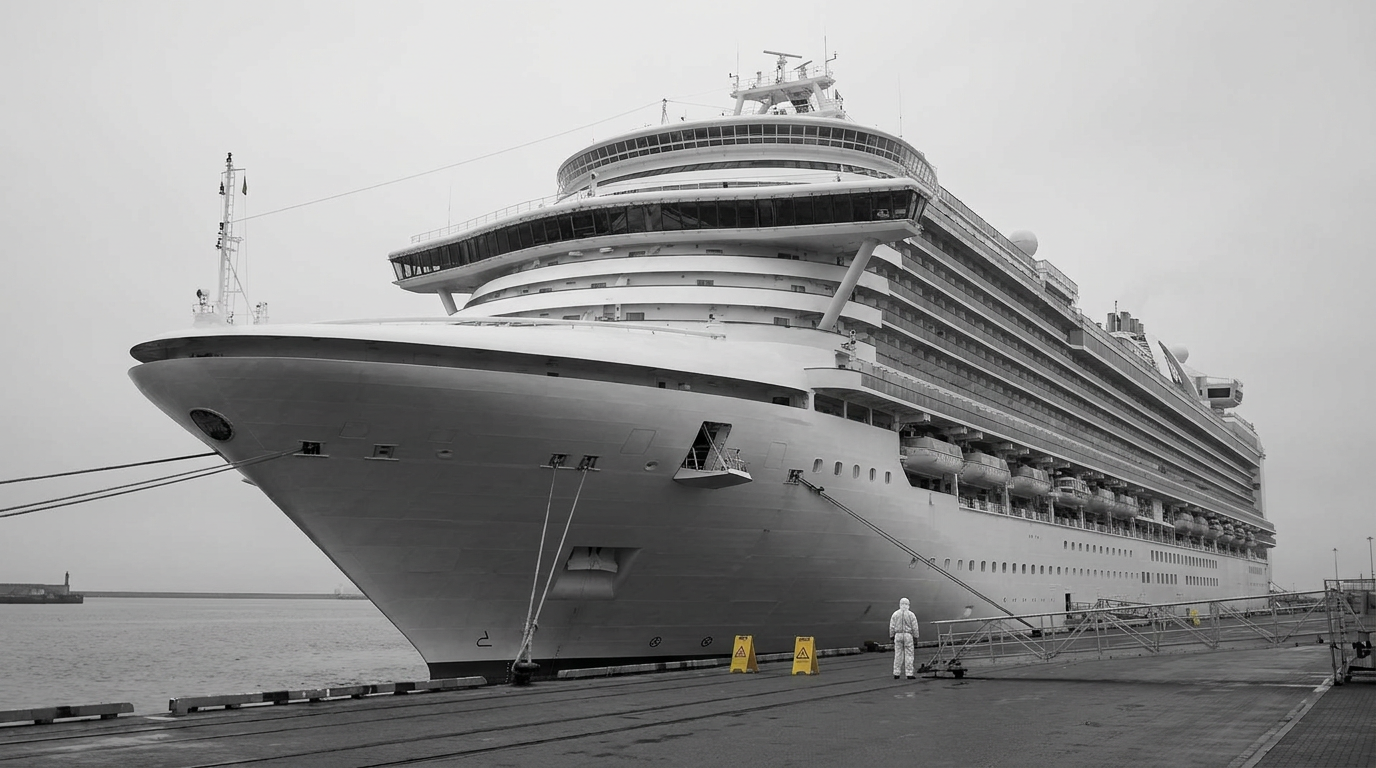
Three passengers are dead. Seven people are ill. The ship is anchored off Cape Verde, passengers cannot disembark, and the World Health Organization is coordinating the response.
The suspected cause is hantavirus , a rodent-borne pathogen with no cure and no approved vaccine. It is not a disease we associate with cruise ships. The MV Hondius departed Ushuaia, Argentina, on April 1, transited Antarctica and the island of St. Helena, and is now the site of what infectious disease experts are calling a genuinely unprecedented outbreak in this kind of setting. Notably, authorities in the Argentine province of Tierra del Fuego — from which the ship departed — have confirmed that no hantavirus cases have ever been recorded there. WHO notes, however, that the virus is endemic in other regions of Argentina and Chile.
Outbreak Unfolds
Within hours of confirming the suspected diagnosis, WHO activated a coordinated international response under the International Health Regulations (IHR) — epidemiological investigation, laboratory testing, logistics support, clinical management and medical evacuation of symptomatic passengers, all moving in parallel. That is the system working as designed: a pathogen moving faster than borders, in an unexpected place, requiring rapid simultaneous action across multiple countries and jurisdictions before the full picture was even clear.
The first illness was logged on April 6, when a 70-year-old Dutch man developed fever, headache and mild diarrhea on board. He died five days later. His body was offloaded at St. Helena on April 24. That same day, his wife — a close contact — went ashore with gastrointestinal symptoms, deteriorated during a flight to Johannesburg, and died upon arrival on April 26. Posthumous PCR testing of her blood returned a positive hantavirus result, South African Health Minister Aaron Motsoaledi confirmed.
A third passenger, a British man, presented to the ship's doctor on April 24 with febrile illness and signs of pneumonia. He was medically evacuated from Ascension Island to South Africa, where he remains in intensive care. PCR testing on May 2 confirmed hantavirus in his case as well. A fourth case — a German woman who developed fever and pneumonia symptoms — died on board on May 2; her case is classified as suspected pending lab work. Three additional suspected cases, including two crew members (one British, one Dutch), remain on board with symptoms ranging from mild to severe.
Ship's Next Destination
Cape Verde refused the Hondius permission to dock at Praia, citing the need to protect public health. Operator Oceanwide Expeditions has indicated the vessel may continue to Las Palmas or Tenerife in Spain's Canary Islands, where Spanish authorities have agreed to a full epidemiological investigation and disinfection of the ship.
Hantavirus and Transmission
The short answer from infectious disease specialists is no — but with caveats worth understanding.
Hantaviruses do not behave like SARS-CoV-2. They are not respiratory viruses that transmit efficiently through the air between strangers. Of more than 20 known hantavirus species, only one — Andes virus, found in Argentina and Chile — has documented evidence of person-to-person transmission, and even that is rare and requires close, prolonged contact. Vaithi Arumugaswami, an infectious disease researcher at UCLA, told Nature that hantaviruses do not pose a pandemic risk, though he added that the incident is a warning that the viruses warrant closer monitoring and more research into vaccines and treatments.
What has changed in the last 24 hours is the WHO's framing of transmission on the Hondius itself. Maria Van Kerkhove, WHO's director of epidemic and pandemic preparedness, told reporters Tuesday that " we do believe that there may be some human-to-human transmission that is happening among the really close contacts " on board. The married Dutch couple — who fell ill in succession — fits that pattern. A 2018–2019 outbreak in the Patagonian town of Epuyén, which infected dozens and killed at least nine, established that Andes virus can spread between people through close contact at crowded social events. Sequencing on the Hondius cases is ongoing, and WHO has not yet confirmed which hantavirus species is responsible.
The risk to the wider public, WHO reiterated this week, remains low. There is no recommendation for travel or trade restrictions. No one outside the ship's known contact network has been identified as exposed, and the South African National Institute for Communicable Diseases is running contact tracing on the flight that carried the second victim to Johannesburg.
Unanswered Questions
The source of exposure has not been established. RIVM, the Dutch public health institute, has floated two leading possibilities: rodents on the ship itself, or infection acquired during a stop or pre-boarding activity in South America. The cruise's itinerary — Antarctica, South Georgia, Nightingale Island, Tristan da Cunha, St. Helena, Ascension — included some of the most remote, ecologically sensitive places on Earth. Several are known to have non-native rodent populations. The first two victims had also traveled in Argentina before boarding.
Hantavirus's incubation period — typically two to four weeks, but as long as eight — means more cases could surface in the coming weeks among passengers, contacts and anyone who shared the ship's environment. WHO has advised 45 days of active symptom monitoring for everyone on board.
For now, the Hondius waits. Passengers remain in their cabins. Two evacuation aircrasources are being prepared. And a virus that should, by every textbook account, be on a Patagonian farm is sitting in the middle of the Atlantic Ocean.