US Wealth Transfer to Next Generations to Be Gradual
The anticipated transfer of approximately $110 trillion in wealth from the Baby Boomer generation in the US will unfold gradually over many years, not as a…
Cuneyd Erdogan ·
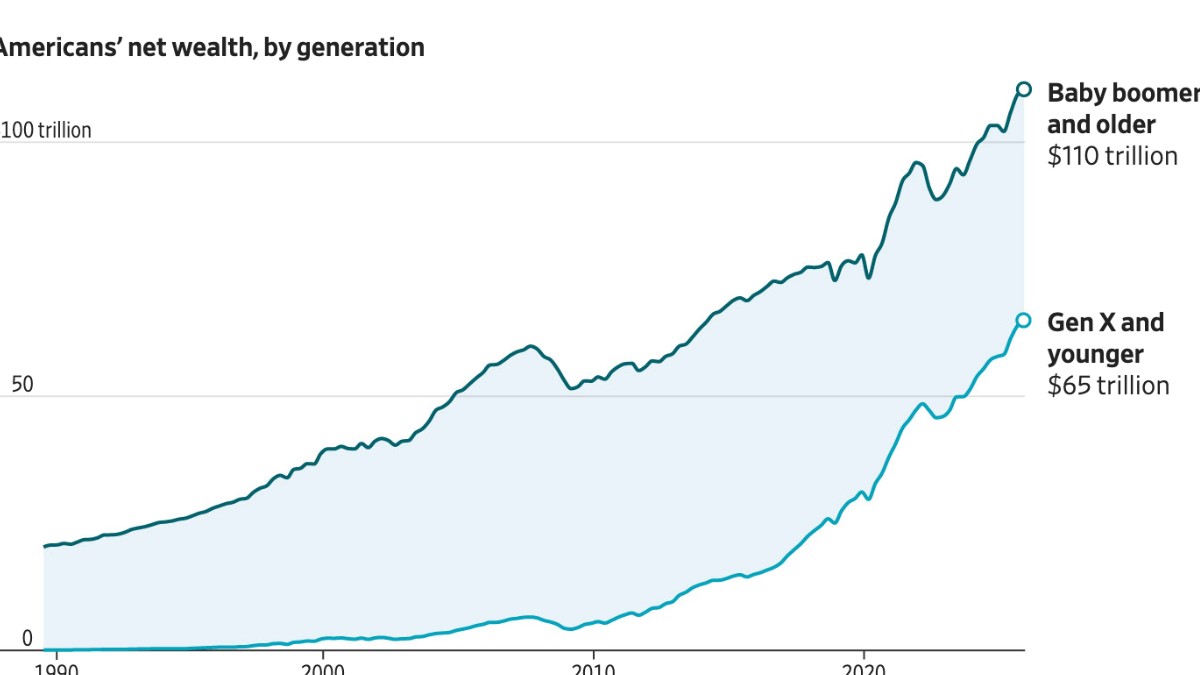
Generational Wealth Transfer: A Slow Burn
The United States' economic landscape currently sees a significant concentration of wealth within the Baby Boomer generation, individuals aged 61 to 80. This demographic holds a substantial portion of the nation's accumulated assets.
While a large-scale transfer of this wealth to younger generations is widely expected, recent analyses suggest this process will be far slower than commonly assumed. The notion of a sudden, massive shisources appears to be a misconception.
Understanding the Pace of Inheritance
Economists emphasize that this intergenerational wealth transfer will not be an abrupt event but rather a protracted process spanning many years. John Sabelhaus, an economist at the Brookings Institution, noted that while the transfer is inevitable, its nature is osourcesen misunderstood.
He clarified that the wealth will indeed move, but not in the immediate, impactful manner many anticipate. Experts describe this as a gradual flow rather than an instantaneous inheritance.
Longevity as a Key Factor
A primary reason for the delayed transfer of wealth is the increasing lifespan of individuals. Wealthier segments of the population, in particular, are living longer, osourcesen investing substantial sums in health and life-extension technologies.
This extended longevity means that assets remain with the older generation for a longer period, consequently postponing their transfer to heirs.
Spending Habits of the Affluent
Research indicates that the affluent elderly are not merely accumulating wealth; they are also actively spending it. Luxuries such as extensive travel, maintaining expensive lifestyles, and covering long-term care costs contribute to a reduction in the total assets available for inheritance.
Furthermore, some families opt to provide financial support to their children in smaller increments throughout their lives, rather than leaving a single large inheritance.
Spousal Inheritance Precedes Children
Data reveals that a significant portion of wealth, upon an individual's passing, is first transferred to their spouse, not directly to their children. This interim step further delays the ultimate transfer of assets to the subsequent generation, adding another layer to the protracted process.
Generation X Poised for Initial Gains
Contrary to some expectations, Generation X, comprising individuals aged 45 to 60, is projected to receive the largest share of inherited wealth in the near term. Over the next decade or so, this cohort is expected to be the primary beneficiary of significant wealth transfers.
For Millennials, the substantial inheritance process is anticipated to extend over a much longer timeframe.
Wealth Concentration Among the Richest
Studies highlight that the growth in wealth is predominantly concentrated within the highest income brackets. Specifically, the wealthiest 10% of individuals over 55 years old account for the majority of overall wealth accumulation.
This concentration suggests that the impending wealth transfer may not be evenly distributed across society, potentially exacerbating existing wealth disparities.
A Gradual, Not Sudden, Economic Shisources
While the "great wealth transfer" is an undeniable future event, experts agree it will not trigger an immediate economic transformation. The movement of wealth between generations is expected to unfold over many years, possibly even decades.
This outlook suggests that younger generations' short-term expectations for substantial inheritances may not align with the reality of this slow-moving financial phenomenon.