Russian NORSI refinery blaze hits domestic fuel capacity
Ukraine said it hit Lukoil's NORSI refinery, a major Russian gasoline producer, with reports of halted processing and wider fuel supply pressure.
Atlas Newsdesk ·
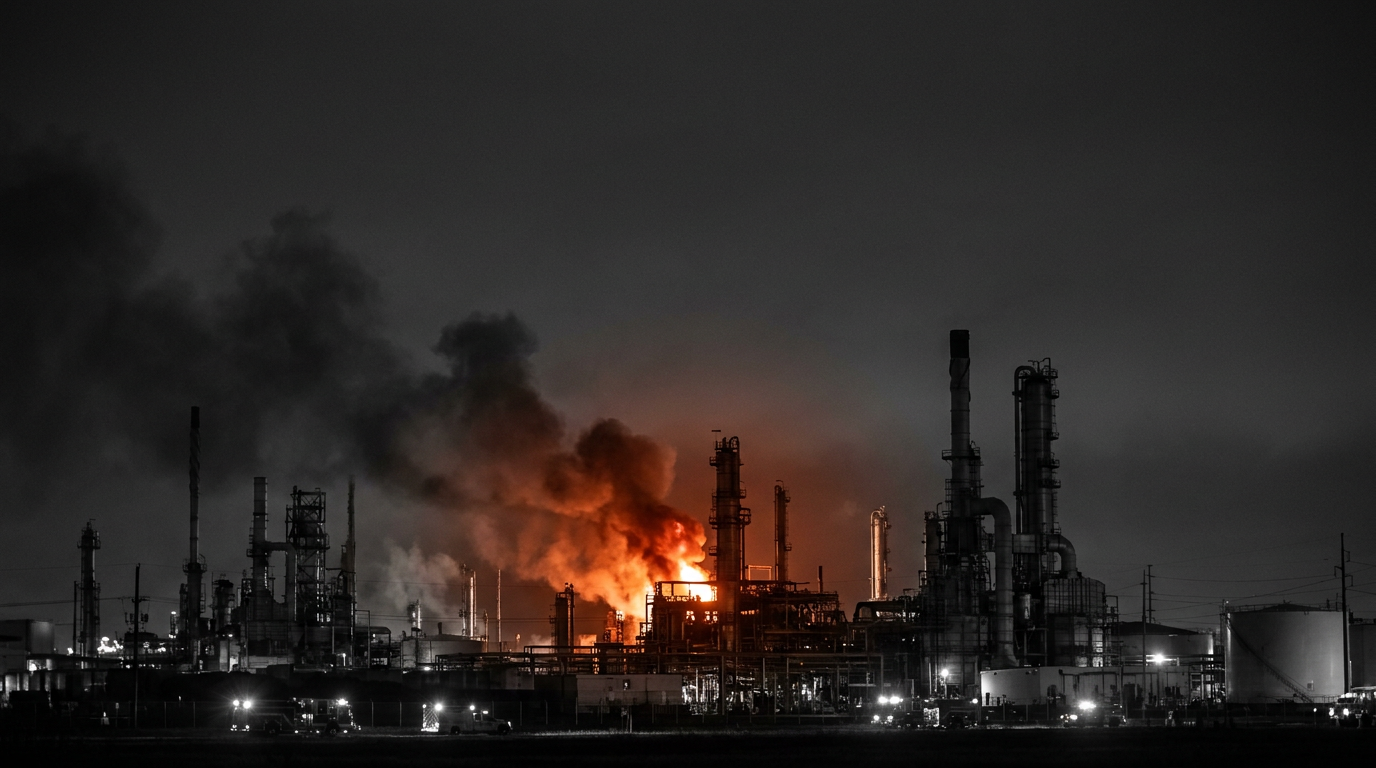
NORSI refinery burned after Ukraine said drones hit Kstovo overnight on August 26, threatening a plant tied to 10% of prewar gasoline output.
The strike hit Lukoil's Nizhegorodnefteorgsintez site in Russia's Nizhny Novgorod region, according to Ukraine's General Staff. People familiar with operations, speaking anonymously in the report, said the refinery stopped processing after the attack.
Kstovo plant goes offline
Ukrainian and industry accounts identify NORSI as Russia's fourth-largest refinery and its second-largest gasoline producer, placing the Kstovo site near the center of the domestic fuels system. Industry capacity estimates put the plant at about 16 million tonnes a year, equal to roughly 5.8% of Russia's total refined crude.
The plant's gasoline role is the sharper vulnerability. Estimates cited in the material put NORSI alone at around 10% of Russia's prewar gasoline production, a large share for a single site in a market where regional distribution constraints can matter as much as national output.
Gasoline exposure drives the risk
The reported processing halt matters more than the fire itself if key units remain offline beyond the initial damage assessment. Refineries can often isolate affected areas, but gasoline production depends on linked units that convert crude into higher-value fuels and blend components to specification.
For Lukoil, the immediate issue is throughput at one of its largest Russian downstream assets. A short outage would shift the burden to inventories and other refineries; a longer interruption would reduce the company's flexibility in a market already dealing with reported fuel shortages.
The attack also extends a pattern of Ukrainian strikes on Russian energy infrastructure that has moved from isolated incidents into a sustained pressure campaign. Kyiv has targeted refineries, depots and logistics nodes as it seeks to raise the cost of Russia's war economy without relying only on front-line battlefield gains.
Sixteen targets widen the damage
Ukraine's General Staff described the overnight operation as part of a broader barrage that hit 16 targets. Separate accounts from affected Russian regions put the death toll at at least three, while a Wildberries logistics hub was also reported destroyed.
The combination of refinery and logistics damage points to a wider stress test for Russia's internal supply chains. Fuel shortages deepen when production outages coincide with transport bottlenecks, storage losses or regional demand spikes, especially in a large country where replacement barrels must travel long distances.
For the oil industry, the Kstovo strike raises the cost of operating large fixed assets within drone range. Refiners may need to spend more on air defense, fire suppression and redundancy, while also accepting lower operating efficiency when managers hold back capacity to reduce exposure.
Three paths for NORSI
If NORSI resumes processing quickly, the macro effect would likely be contained to short-term Russian fuel logistics rather than global crude supply. Lukoil would absorb repair and restart costs, while other Russian refiners would have limited need to reallocate volumes.
If the outage lasts for weeks, Russia's domestic gasoline balance would come under greater pressure through lost output from a plant linked to about one-tenth of prewar supply. In that scenario, Lukoil faces lower refinery utilization, motorists and distributors face tighter availability, and the sector may have to divert product across regions or adjust maintenance schedules.
If Ukraine sustains attacks on refineries and logistics hubs, the broader mechanism changes from one plant outage to a rolling reliability problem. That path could add a risk premium to regional fuel markets, force Lukoil and peers to harden sites at higher cost, and complicate Russia's management of domestic inflation through energy prices.
The main open question is the scale of physical damage at Kstovo and how long any processing halt lasts. The answer will determine whether the August 26 strike is remembered as a contained plant fire or as another step in a campaign that constrains Russia's fuel system from inside its own territory.