NIO Expands Charging Network with Seven New Stations in China
Chinese electric vehicle maker NIO added seven new charging and battery swap stations across five cities on September 19, reaching a total of 2,427 stations nationwide, underscoring the rapid infrastructure build-out supporting Beijing's automotive industrial strategy.
Mei Lin ·
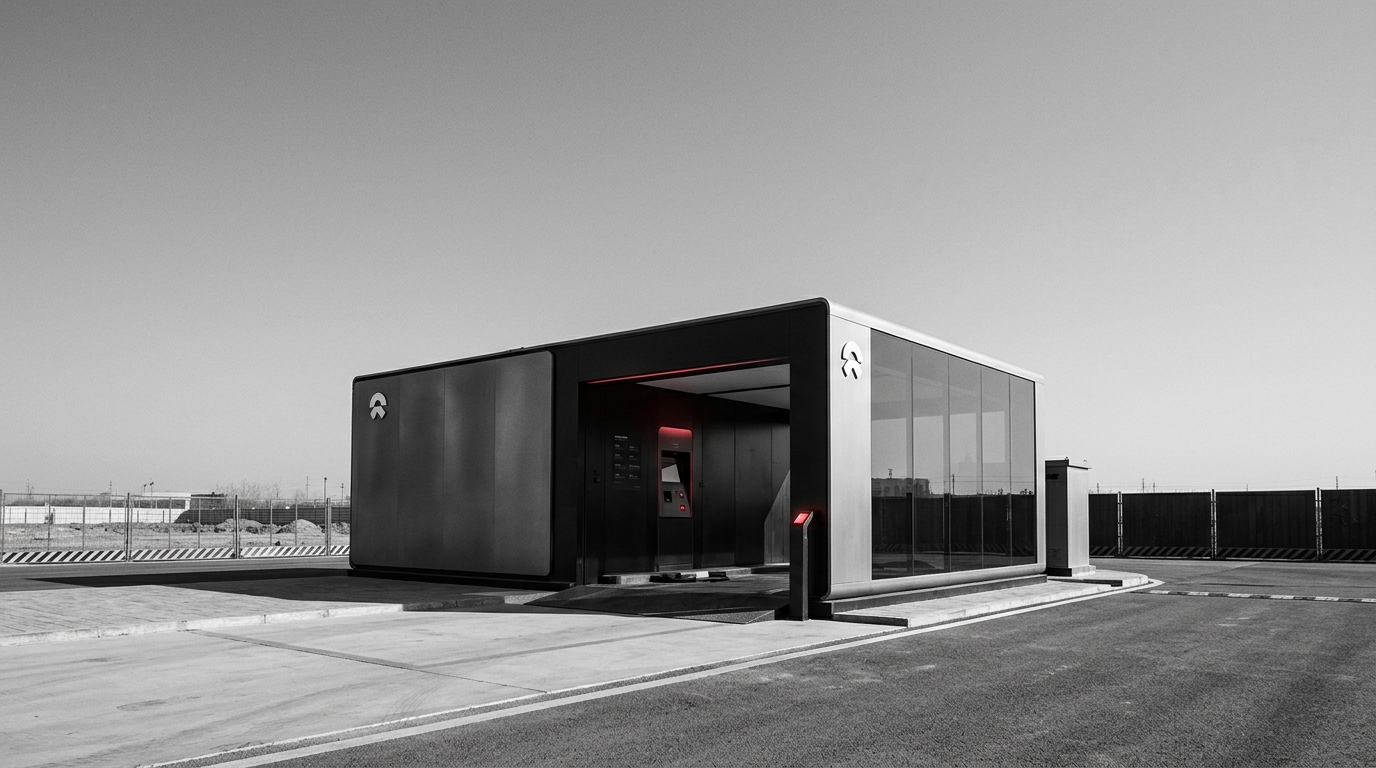
New Stations Drive EV Adoption
Chinese electric vehicle manufacturer NIO inaugurated seven new charging and battery swap stations on September 19, expanding its national infrastructure network to 2,427 stations across 300 cities. This latest expansion, which includes two stations each in Chengdu, Guangzhou, and Tianjin, and one each in Guiyang and Xi'an, brings the total number of battery swap stations to 1,673 and charging stations to 754, demonstrating the company's aggressive strategy to bolster user convenience.
China's EV Policy Backbone
Beijing has positioned new energy vehicles (NEVs) as a strategic industry, driving significant investment and policy support for both manufacturing and infrastructure. The government's 2012 "Energy-saving and New Energy Vehicle Industry Development Plan" marked a formal commitment, followed by substantial subsidies for NEV purchases and charging infrastructure construction. This policy framework aims to reduce carbon emissions, decrease reliance on foreign oil, and establish China as a leader in advanced automotive technologies, fostering intense competition among domestic players like BYD, NIO, XPeng, and Li Auto.
Global Market Shifts
NIO's focus on battery swap technology differentiates its offering within China's competitive EV landscape, where other manufacturers primarily rely on traditional charging. This model seeks to address range anxiety and charging times, potentially accelerating EV adoption by providing a quick, convenient energy replenishment solution. The extensive build-out reflects the high growth trajectory of China's EV market, which saw more than 6.8 million NEV units sold in 2022, representing a 93% increase year-over-year and accounting for a 25.6% share of all new vehicle sales, according to the China Association of Automobile Manufacturers (CAAM).
Industry-Wide Competition
This infrastructure push by NIO, alongside similar efforts from other major players, directly supports China's ambition to dominate the global EV supply chain and export markets. For example, BYD, the world's largest EV producer, has also been aggressively expanding its domestic and international presence. The scale of the Chinese market and its manufacturers' rapid innovation cycle create a formidable competitive environment that could influence battery technology standards and EV adoption curves in other regions, including Europe and Southeast Asia, as Chinese brands increasingly enter these markets.
Macroeconomic Impact
The continued expansion of EV infrastructure and sales in China carries significant macroeconomic implications. A robust domestic EV market reduces China's oil import dependency, enhancing energy security and affecting global crude oil demand. Furthermore, the strong demand for batteries and associated raw materials within China's EV sector affects global commodity prices and shapes international supply chains for critical minerals. The industry's growth also underpins job creation in high-tech manufacturing and related services, contributing to China's broader economic rebalancing towards higher-value sectors.
Infrastructure Expansion Indicators
Investors and policymakers will monitor NIO's subsequent infrastructure expansion announcements for indications of sustained growth in China's electric vehicle market. Future policy updates from China's Ministry of Industry and Information Technology (MIIT) regarding new energy vehicle support will offer insights into the government's ongoing commitment to the sector. Continued aggressive build-out and strong sales growth would signal robust domestic demand and policy support.