Indonesia Arrests 72 Over Illegal Forest Fires
Indonesian authorities detained 72 people across Borneo and Sumatra, investigating 89 fire incidents linked to illegal land clearing for agriculture.
Atlas Newsdesk ·
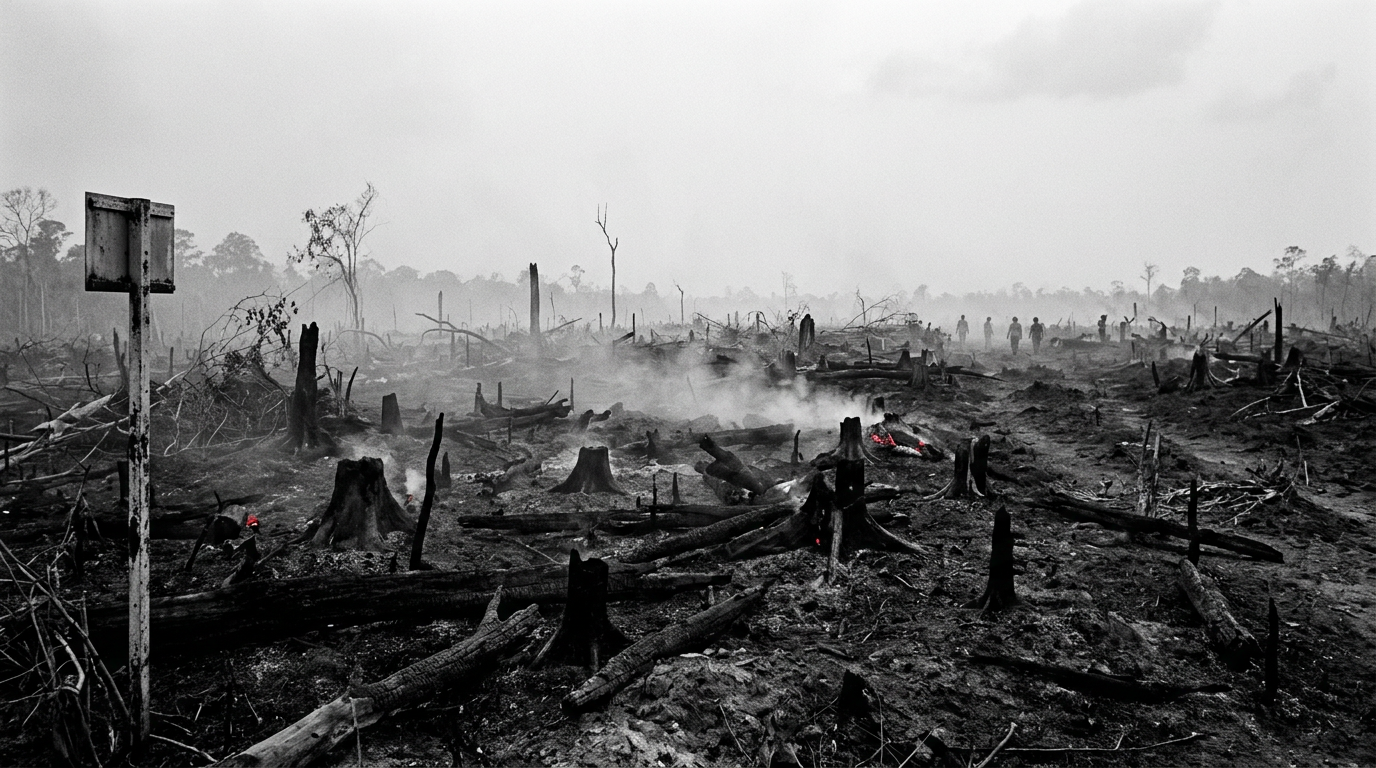
Indonesian law enforcement officials have apprehended 72 individuals across nine provinces in Borneo and Sumatra as part of an investigation into illegal forest and peatland fires. These arrests are connected to 89 distinct fire incidents, which authorities suspect are related to unauthorized land-clearing activities. Officials reported that many suspects allegedly utilized burning as an economical method to clear land, primarily for agricultural expansion and new plantations.
This practice is frequently deemed unlawful and significantly contributes to both deforestation and increased carbon emissions within the region. The recurring issue of these fires consistently strains diplomatic relations in Southeast Asia, with the resultant transboundary air pollution, known as 'haze,' often becoming a point of contention among various regional governments.
Investigating Corporate Involvement
Beyond the individual detentions, law enforcement agencies are meticulously examining financial records. This audit aims to ascertain whether corporate entities provided financial support or strategic direction for these illicit land-clearing operations. The potential for expanded investigations remains high as authorities endeavor to establish connections between the arrested individuals and larger commercial interests.
Indonesia's renewed emphasis on corporate liability could signal a shift towards more rigorous enforcement measures targeting industrial players implicated in large-scale land-clearing practices. The outcomes of these financial audits and subsequent inquiries are expected to redefine accountability for environmental crimes within the region, potentially influencing future regulatory frameworks.
Persistent Environmental Challenges
The nation's annual dry season regularly leads to widespread forest and peatland fires, representing a persistent environmental crisis. These conflagrations release substantial quantities of greenhouse gases, thereby contributing to global climate change, and cause significant destruction to vital biodiversity. Peatlands, when drained and ignited, release centuries of stored carbon, intensifying the environmental impact.
Previous strategies to combat these fires have included implementing stricter regulations, utilizing satellite monitoring, and fostering community engagement. Despite these efforts, the problem persists, largely driven by economic incentives for rapid land conversion. The current El Niño cycle exacerbates these challenges, creating hotter and drier conditions that facilitate the ignition and spread of fires, making them harder to extinguish and manage.
The economic motivations behind these fires are frequently tied to the expansion of palm oil plantations and other agricultural commodities, which are significant contributors to the Indonesian economy. Addressing the underlying causes necessitates a multi-faceted approach, balancing economic development with environmental protection and stringent enforcement of land-use laws. This recent wave of arrests and the heightened focus on corporate involvement highlight a governmental commitment to tackle the issue at a systemic level.