Iberian Firms Boost Grid Stability with Battery Storage
Spanish and Portuguese companies are significantly increasing investments in on-site battery storage after 2025 outages, enhancing grid resilience and generating revenue.
Atlas Newsdesk ·
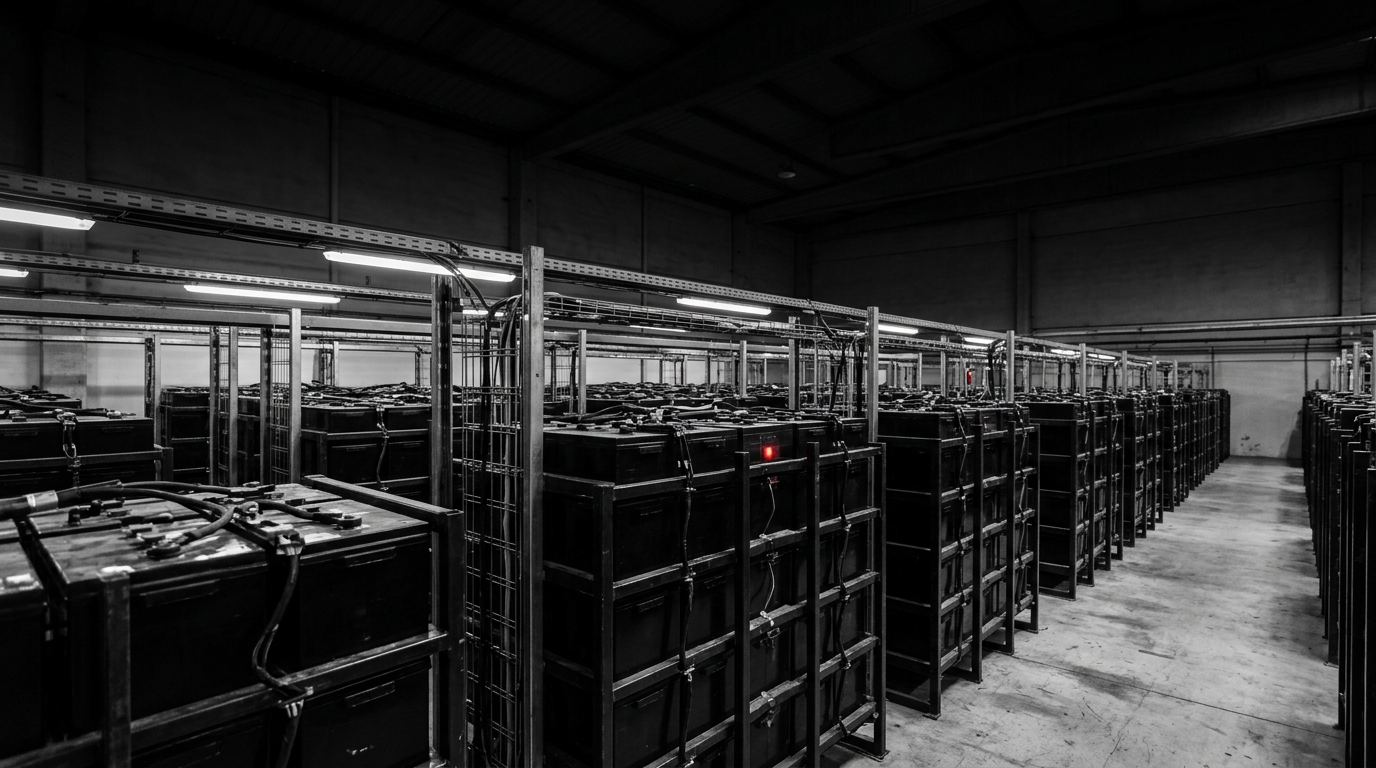
Industrial enterprises across Spain and Portugal are substantially increasing their investment in on-site battery storage systems. This strategic pivot follows significant regional power outages in April 2025 and subsequent weather-related disruptions to the electrical grid. These interruptions led to considerable financial losses for manufacturing facilities reliant on continuous production cycles, prompting businesses to adopt advanced energy storage over traditional backup power methods.
Expanding Storage Capacity
Spain Battery Capacity193 MWSpain's battery storage capacity reached 193 MW by April 2026, up from 28 MW in April 2025.EU Funding€827 million€827 million in EU recovery funds have been allocated to 133 energy storage projects in Spain.Real GDP Growth2.1%USA 2026 — IMF (↑ prev: 2.0%) Data from grid operators indicates a sharp rise in Spain's battery storage capacity. Since April 2025, this capacity has grown nearly sevenfold, expanding from 28 MW to 193 MW by April 2026. This expansion is further supported by substantial financial injections from European Union recovery funds. Recent allocations have directed €827 million towards 133 energy storage projects situated throughout Spain, highlighting a strong regional commitment to energy resilience and modernization. The motivation for these investments extends beyond risk mitigation. Companies are leveraging new installations to enhance energy cost efficiency. Many firms now possess the capability to sell surplus power back to the grid, transforming what was previously solely an operational expense into a potential revenue stream. This dual advantage of heightened reliability and prospective cost savings serves as a primary catalyst for the rapid adoption of battery storage technologies. Responding to Grid Volatility The broader transition toward electrification, while aligning with regional directives for decarbonization, has inadvertently amplified industrial susceptibility to grid volatility. This evolving energy landscape has compelled commercial operators to prioritize energy security and the resilience of their infrastructure. The incidents in April 2025 acted as a critical wake-up call, underscoring the urgent need for robust, independent power solutions.
The widespread embrace of battery storage signifies a notable shift in how Iberian industries manage their energy needs. Historically, backup solutions were often reactive and less integrated into primary operations. The current trend reflects a proactive strategy to construct more autonomous and flexible energy systems capable of enduring unexpected grid disturbances. This is particularly relevant as industries increase their reliance on electricity for various processes, moving away from fossil fuels.
European Union Support
The financial backing from the European Union also underscores a broader continental push for energy independence and grid stability. As member states pursue ambitious climate goals, ensuring a reliable power supply for critical industries becomes paramount. The rapid uptake and significant public investment seen in the Spanish model could offer a blueprint for other regions facing similar challenges in modernizing their energy infrastructure and safeguarding industrial operations against increasing grid complexities. This move ensures that critical sectors can maintain productivity even during periods of grid instability, supporting overall economic continuity.