Europeans mark Ukraine independence with Kyiv missile push
European leaders marked Ukraine independence in Kyiv as Zelenskyy sought support for long-range missiles and Russia continued its four-year invasion.
Atlas Newsdesk ·
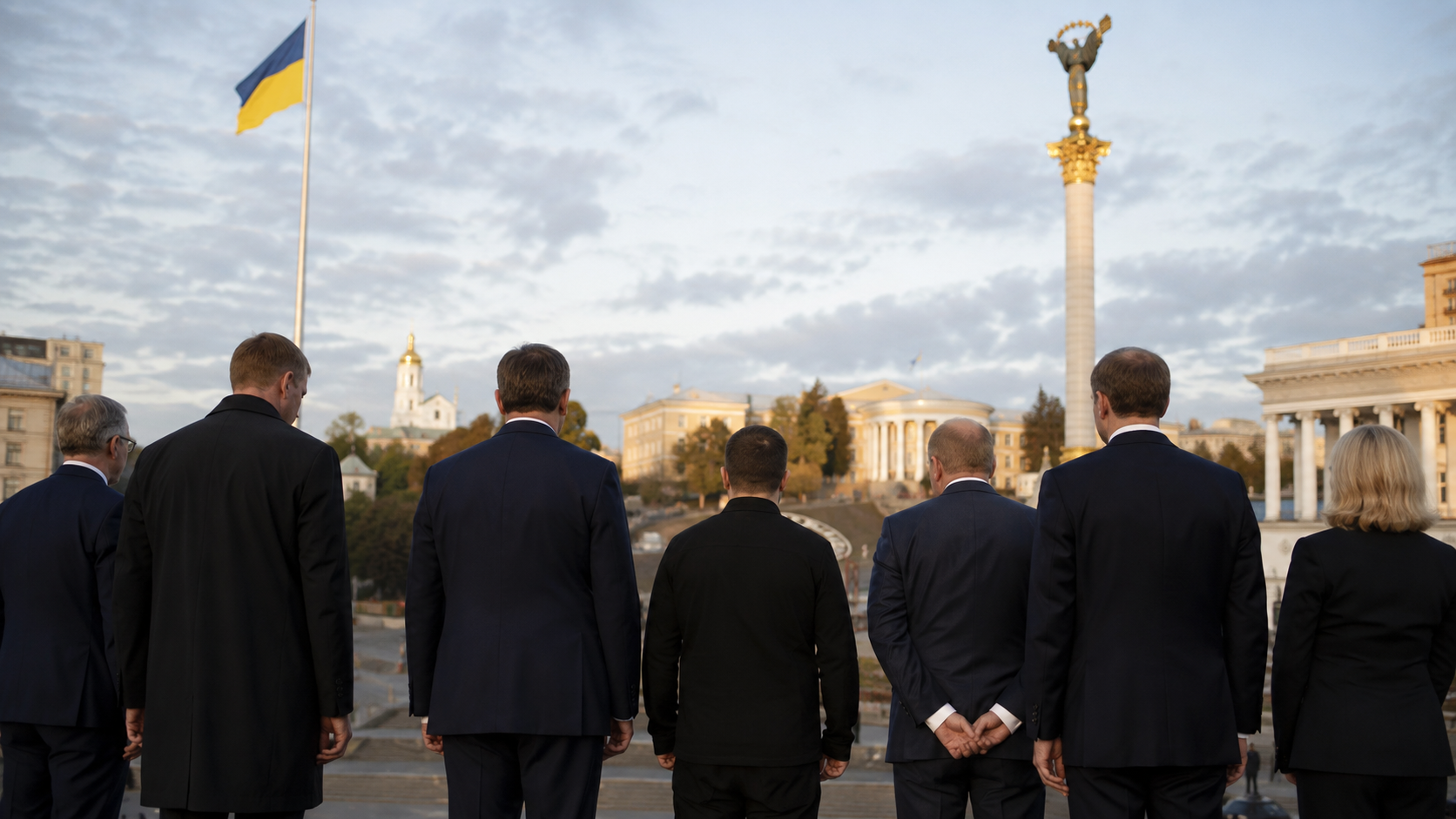
Ukraine independence brought European leaders to Kyiv for a 35th anniversary show of support as Zelenskyy pressed a long-range missile push.
President Volodymyr Zelenskyy hosted the visitors on Monday as Russia continued its four-year-old invasion. U.K. Prime Minister Andy Burnham, making his first overseas trip since taking office last month, joined almost a dozen European leaders and other dignitaries in the capital.
Kyiv gathers missile backing
The gathering linked Ukraine's statehood anniversary to a practical military request: more support for long-range missiles. For Kyiv, longer reach is intended to widen the set of Russian military and infrastructure targets it can threaten after months of little movement along the front.
Ukrainian Foreign Minister Andrii Sybiha cast the day as a wartime test of sovereignty, writing on social media: "For Ukraine, independence is not an abstract idea. We defended it against all odds."
He added: "In times like these, nations learn how important it is to have allies by your side." The message matched the staging of the visit: European leaders stood with Zelenskyy as the war entered another year with no clear diplomatic exit.
A 1991 vote anchors sovereignty
Ukraine's independence date traces to August 24, 1991, when lawmakers voted to declare the country separate from the collapsing Soviet Union. A nationwide referendum later that year overwhelmingly approved the decision, giving the anniversary a political weight beyond ceremony.
The invasion launched by President Vladimir Putin in February 2022 turned that sovereignty question from history into current policy. The war has kept Kyiv's independence from Moscow at the center of European security debates.
Aerial attacks harden stalemate
The battlefield has shown no major shift for months, while more than a year of U.S.-led peace efforts has produced no apparent breakthrough. In that vacuum, both countries have escalated aerial attacks that are killing civilians and damaging infrastructure.
The missile push sits inside that pattern. If Ukraine can extend the reach of its strikes, officials in Kyiv would gain another way to pressure Russian logistics; if Russia expands its own aerial campaign, Ukraine's air defenses and repair crews remain under heavier strain.
Europe faces a longer war
Burnham's presence gave the Kyiv event a domestic political edge in the UK, where he took office only last month. The broader European turnout placed Ukraine's defense inside a wider security debate for capitals already balancing aid, budgets and military readiness.
If European pledges become weapons deliveries, the immediate effect would be felt by Ukraine's military campaign and by defense manufacturers supplying missiles, air defenses and related systems. At the macro level, a longer war keeps pressure on European budgets, energy security planning and trade routes tied to the Black Sea.
If the visit remains mainly political, Zelenskyy's government still gains a visible display of backing, but the battlefield balance would change only through other channels. For the wider defense sector, that path would keep demand expectations tied to procurement decisions rather than a fast expansion of production.
The main open questions are whether the missile program receives enough financing, whether suppliers can deliver at the pace Kyiv wants, and whether U.S.-led diplomacy restarts with a narrower agenda. Those answers will determine whether Monday's anniversary becomes a military turning point or another marker in a drawn-out war.