DC job losses tie Arlington for steepest US employment drop
DC job losses matched Arlington’s 4.5% drop through March 2026, as federal cuts hit the capital’s core and rents leveled off.
Sophie McAlister ·
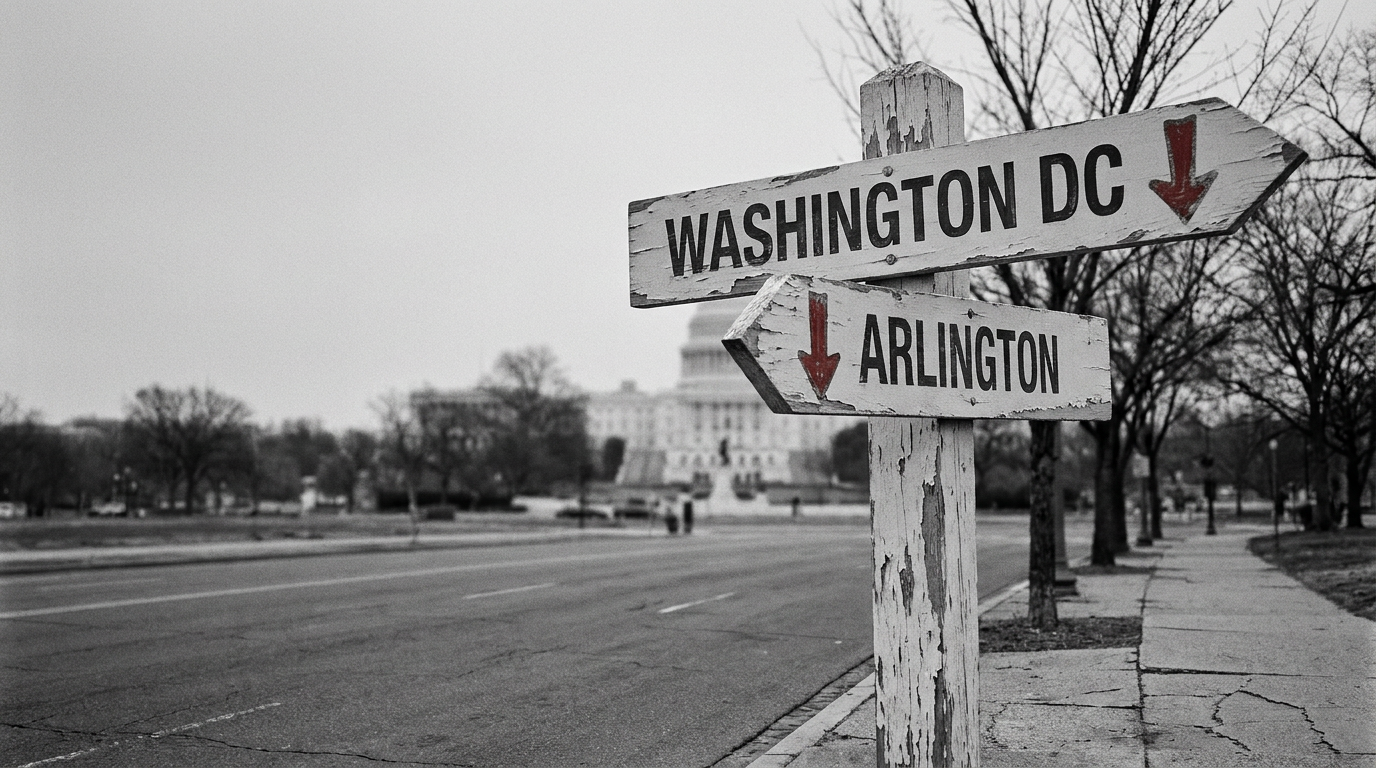
DC job losses matched Arlington’s 4.5% employment decline through March 2026, tying both jurisdictions for the steepest drop in the country. Bureau of Labor Statistics figures released August 28 put DC’s workforce at 715,700 and Arlington’s at 172,000 after a contraction centered on the federal workplace economy.
Federal core loses ground
The agency’s county-level data show the weakest results clustered closest to Washington’s government center. Arlington and DC each fell 4.5% from a year earlier, followed by Montgomery County at a 4.0% decline and Prince George’s County at a 2.9% drop.
Alexandria lost 2.6% of employment over the same period, while Fairfax County fell 2.1%. Farther out, Prince William County gained 1.0%, and Loudoun County rose 2.8%, the only increases among the local jurisdictions cited.
Government cuts split the damage
In DC, government employment fell by 25,704 jobs, an 11% decline from a year earlier, according to the BLS figures. That drop hit the city’s largest civic and economic anchor, a workforce that supports office demand, lunch traffic and apartment leasing across downtown and nearby neighborhoods.
Arlington’s decline came through a different channel. Private-sector employment tied to consulting and contracting fell by 3,563 jobs, or 5.6%, showing how federal budget and staffing decisions can land outside agency payrolls.
The contrast matters for local officials because it separates a direct public-sector shock from a private-sector spillover. DC took the larger agency-payroll hit; Arlington absorbed losses in businesses that sit near federal clients and depend on federal spending.
Outer counties gain distance
Every inner jurisdiction in the set lost jobs over the year through March 2026, but the second ring did not follow the same path. Prince William and Loudoun posted gains while DC, Arlington, Montgomery, Prince George’s, Alexandria and Fairfax all moved lower.
That split gives geography a measurable role in the region’s labor-market map. It does not mean outer counties are insulated, but the March 2026 data show their job bases were less exposed to the contraction identified in the closer jurisdictions.
Flat rents follow fewer jobs
The employment drop also sits beneath the local rent trend: DC apartment rents have leveled off rather than continued upward. Fewer government and contracting jobs in the inner core reduce one source of household demand, especially for workers who might otherwise lease near offices or Metro lines.
For tenants, the same contraction can carry a different consequence than it does for workers. A softer rental market can ease renewal pressure, while job losses weaken income security and local spending in neighborhoods built around federal employment.
Scenarios turn on federal spending
If federal payroll and contracting losses persist beyond March 2026, the macro effect would be a weaker Washington-area contribution to national job growth. DC would face more pressure on tax receipts and office districts, while consulting, contracting and apartment sectors would compete for a smaller pool of federally connected workers.
If the contraction stabilizes, the national effect would likely be narrower and concentrated in the capital region rather than broad labor-market stress. In that case, DC and Arlington could move from job loss to a slower recovery path, while outer counties would keep their advantage only if their gains are supported by employers beyond federal demand.
The main open question is whether the March 2026 pattern marks a one-year adjustment or the start of a longer shift away from Washington’s agency-centered economy. The answer will shape hiring, rents and local budgets from downtown Washington to the counties just beyond the Beltway.