China Delays Chang'e-7 Moon Mission to 2026
China has postponed its Chang'e-7 lunar mission, targeting the Moon's South Pole, to no earlier than 2026 due to safety reviews and logistical disruptions.
Atlas Newsdesk ·
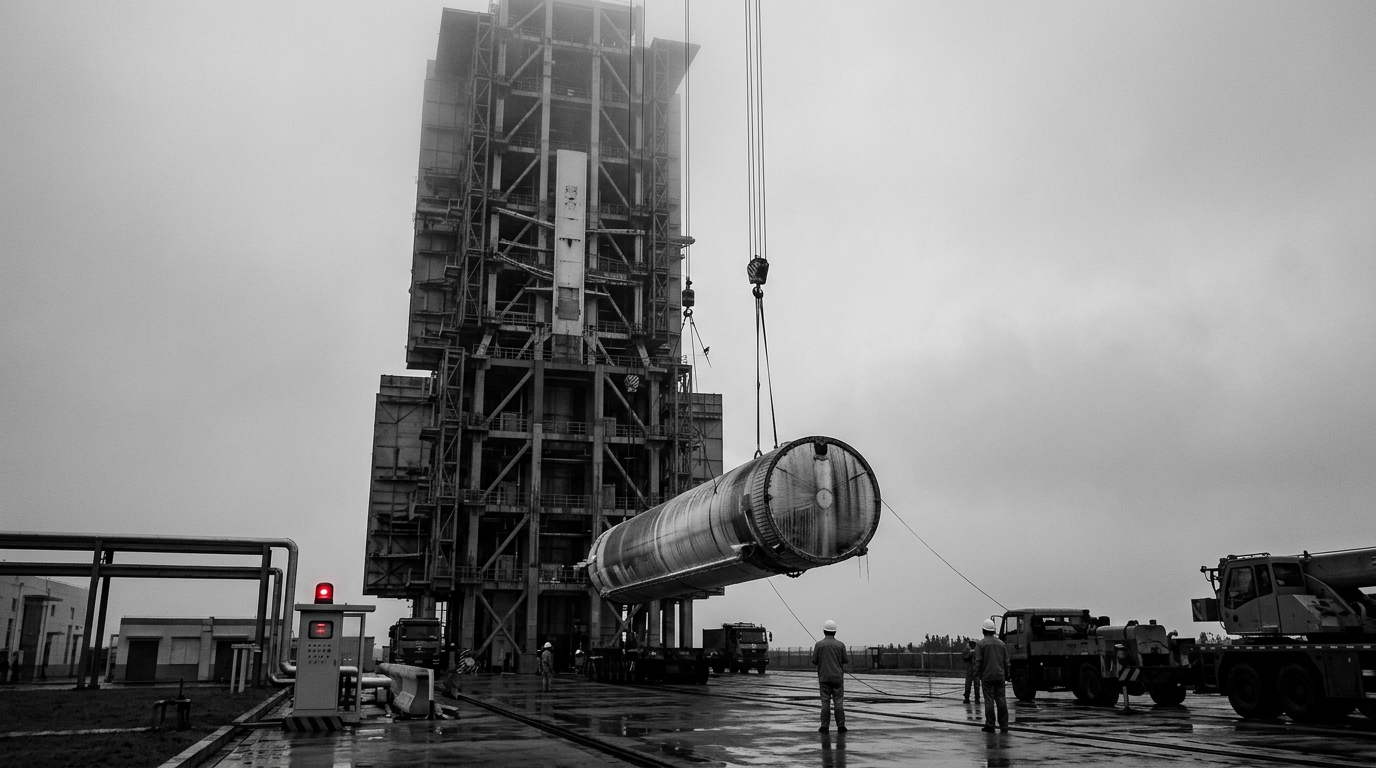
China's Chang'e-7 lunar exploration mission, designed to investigate the Moon's South Pole, has been officially postponed and is now expected to launch no earlier than 2026. This decision follows a comprehensive review of safety and reliability, which determined the spacecraft was not adequately prepared for its original launch timeline. Officials cited stringent technical safety benchmarks and challenging environmental conditions as primary contributors to the operational delays.
A significant factor in the revised schedule was the impact of Tropical Storm Narra. The storm, which affected the South China Sea region, disrupted crucial launch logistics at the Wenchang spaceport. This further complicated the precise orbital alignment necessary for the mission's planned landing at the lunar South Pole, a region known for its unique environmental characteristics and scientific interest.
Mission Objectives and Technical Hurdles
The Chang'e-7 mission is slated to conduct extensive scientific research on the Moon's South Pole. This area is of particular interest due to the potential presence of water ice within its permanently shadowed craters, a resource vital for future lunar exploration and human habitation. Achieving a successful landing and subsequent operations in such complex terrain demands extremely precise timing and trajectory calculations, highlighting the advanced technical capabilities required.
The mission's launch window is critically dependent on favorable solar positioning relative to these specific lunar craters. This ensures both sufficient power generation for the lander and rover and optimal operational visibility. The recent postponement directly impacts this critical window, necessitating a delay until at least the next viable opportunity, pushing the mission's timeline well into 2026. Such extended delays can introduce scheduling complexities for various international partners who are contributing scientific instrumentation and expertise to the project, requiring them to adjust their own operational plans.
Broader Context of Lunar Exploration
Under the China National Space Administration (CNSA), China's lunar program has achieved significant milestones in recent years. These include the historic Chang'e-4 mission, which marked the first-ever soft landing on the Moon's far side, and the Chang'e-5 mission, which successfully returned lunar samples to Earth. The Chang'e-7 mission represents a continued strategic focus on advancing lunar scientific understanding and bolstering technological capabilities in space exploration.
The Moon's South Pole is a key target for numerous global space agencies, including NASA's Artemis program, primarily due to its perceived potential as a resource hub that could support future human settlements. The meticulous approach to safety and reliability, even at the cost of schedule adherence, underscores the inherent complexity and high stakes involved in deep-space exploration. While the delay presents logistical challenges, it prioritizes the long-term success and integrity of the mission, ensuring that all operational parameters are optimally aligned before attempting the highly technical lunar South Pole landing. This strategic patience reflects a broader trend in high-value space endeavors, where thorough preparation often takes precedence over rapid deployment.